Multi6 min read
Onsen Towns You Can Reach Without a Car
Eight hot-spring towns in Japan accessible by train, no rental car needed—from Hokkaido's moor onsen to a bath built into a rural station and Yufuin's lakeside baths.
Best time: Year-round (best autumn–winter)
Onsen Towns You Can Reach Without a Car
There is a stubborn myth that Japan's best hot springs sit at the end of a mountain road you can only drive. It isn't true. Many of the country's most characterful onsen towns are accessible by train—sometimes to a station a short walk from the baths, sometimes with a single local bus or a five-minute ferry to finish the trip. If you are planning onsen towns in Japan accessible by train with no car, this guide is built for you. Every town below is reachable on public transport, and we spell out the car-free route for each one. You'll find amber "moor" water on the Hokkaido plain, a bath built directly into a rural railway platform, a 2,000-year-old bathhouse in Fukushima, a seaside sand bath on Beppu Bay, and a thatched-roof pool on a lake shore in Yufuin. Bring a towel and an IC card; leave the rental counter alone.
01Hokkaidohidden gem
Tokachigawa Onsen (Hokkaido)
十勝川温泉
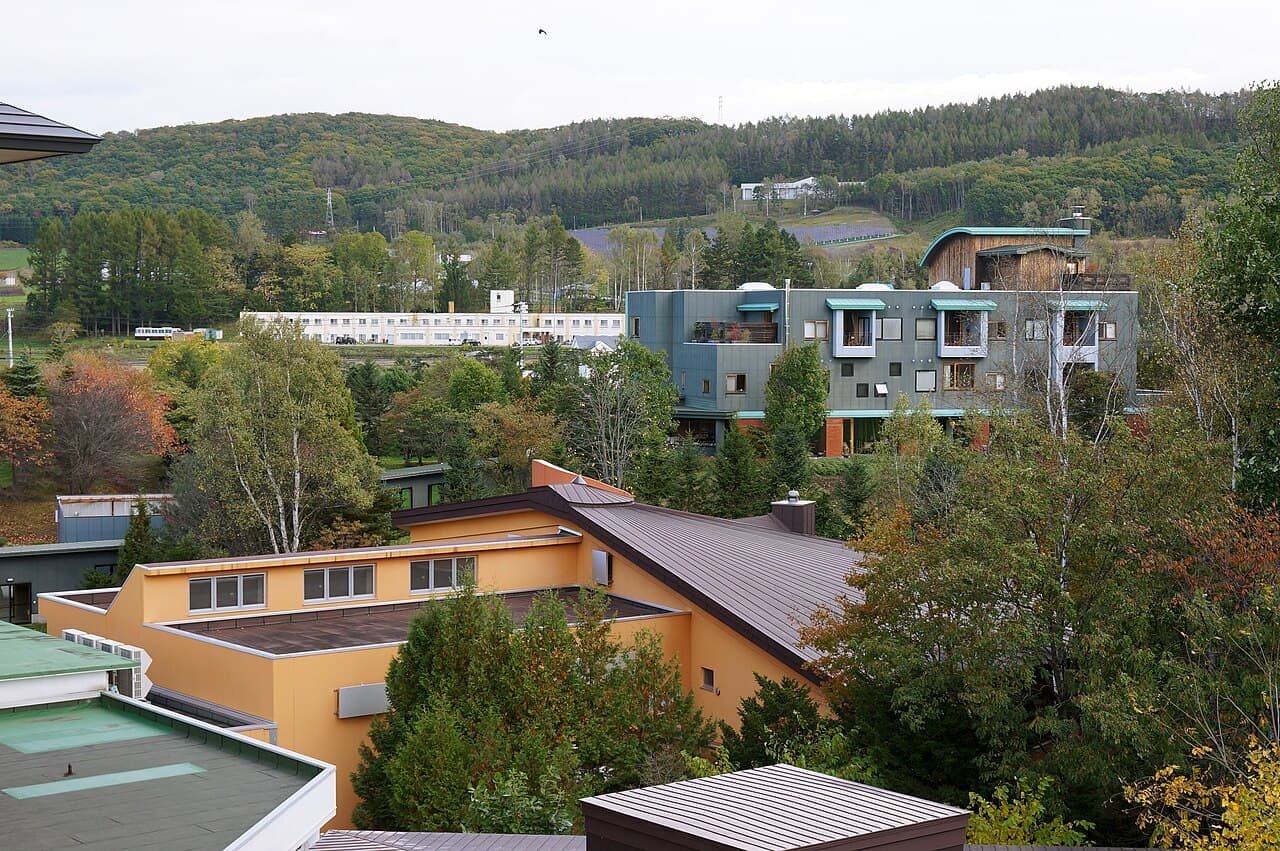
On the banks of the Tokachi River in Otofuke, Tokachigawa is one of the very few sources in the world of "moor onsen" (mo-oru)—amber-coloured water rich in ancient plant sediment that is said to soften the skin. Ryokan line the riverbank across the flat, farm-belt scenery of the Tokachi Plain. It's a quiet agricultural-town soak, overshadowed by Noboribetsu and Jozankei despite its rare, scientifically distinct water. Winter pairs the hot water against snow; autumn brings riverside foliage.
Getting there: From JR Obihiro Station, a local bus reaches the onsen in about 30 minutes (a taxi is roughly 20)—no car required. Best in winter or autumn.
Ani-Maeda Onsen Station (Akita)
This is the car-free onsen made literal: Japan's first hot-spring bath built directly into a train station building. Operated as "Quince Moriyoshi" on the Akita Nairiku Line at the foot of Mt. Moriyoshi, it offers a soak, meals, and lodging right at the platform. Because it sits on the little-used third-sector Akita Nairiku Railway, most travellers heading for Lake Tazawa or Nyuto Onsen never ride past it—which is exactly why it stays quiet.
Getting there: Ride the Akita Nairiku Line about 50 minutes from Kakunodate to Ani-Maeda Station and step off the platform straight into the bath. Best year-round; winter brings snow views from the water.
02Miyagihidden gem
Naruko (Kokeshi Village, Miyagi)
鳴子こけし村
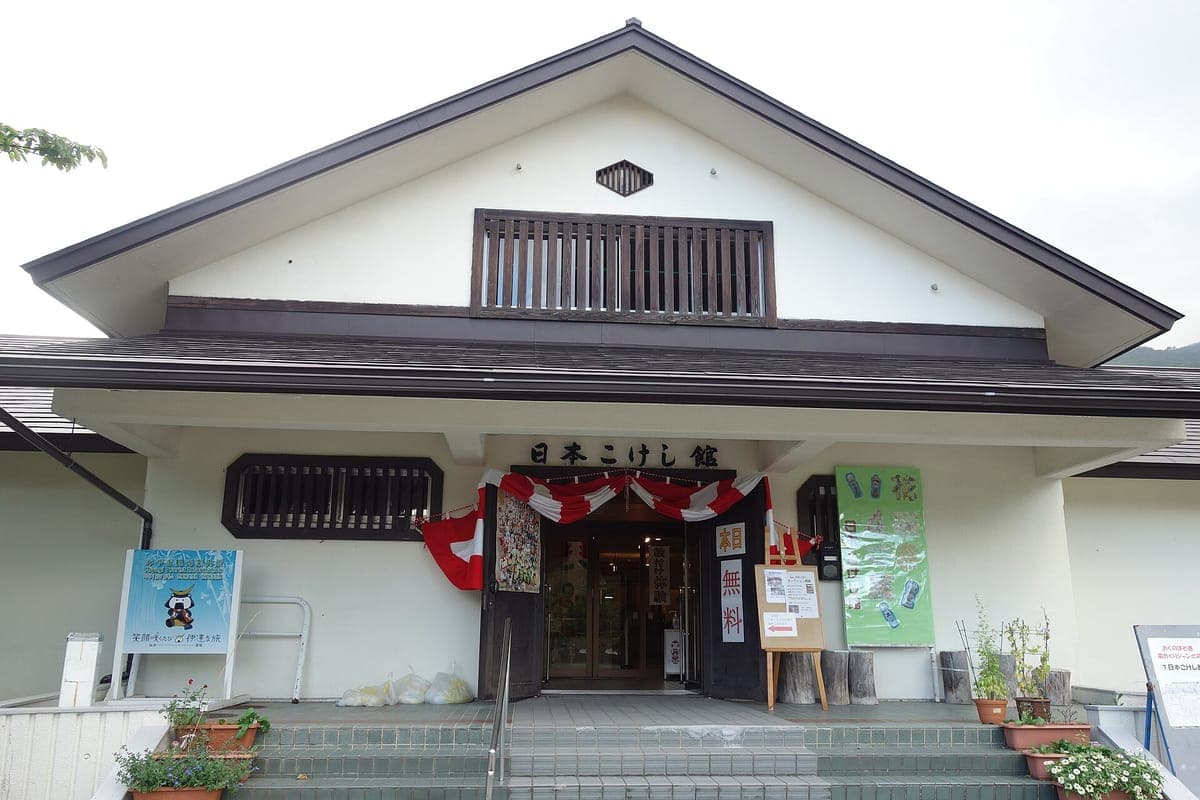
Naruko is the heart of kokeshi doll carving—you can watch artisans turning the traditional wooden dolls and try it yourself—wrapped around one of Tohoku's classic hot-spring towns. It's a genuine blend of craft heritage and relaxing onsen that most travellers skip in favour of bigger names. Spring and autumn are the prettiest, with mild weather and good colour in the surrounding hills.
Getting there: Take the shinkansen to Furukawa Station, transfer to the JR Rikuu East Line to Naruko-Onsen Station, then a short bus to the village—entirely by rail and bus. Best in spring or autumn.
03Fukushimahidden gem
Iizaka Onsen (Fukushima)
飯坂温泉
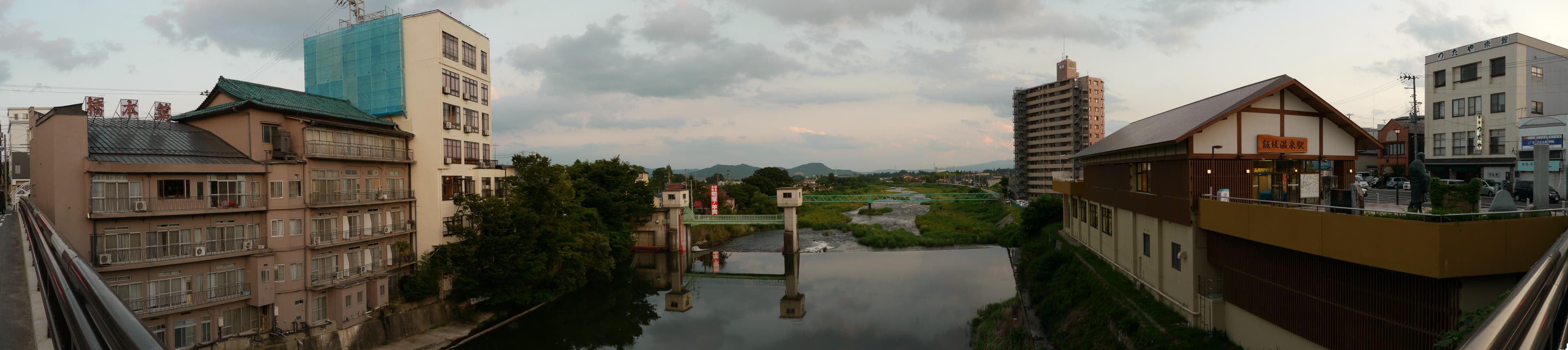
One of Japan's oldest hot-spring towns, Iizaka claims a 2,000-year legendary origin and once stood among the three ancient hot springs of Ōshū alongside Naruko and Akiu. Nine public bathhouses are still active, including Sabako-yu, which the poet Matsuo Bashō visited in 1689 and which remains one of Japan's oldest working community baths. Sitting in the Fukushima City area outside the better-trodden Aizu cluster, it's a deep-history town that stays refreshingly local.
Getting there: From Fukushima Station, the Fukushima Kōtsū Iizaka Line runs direct to Iizaka Onsen Station in about 25 minutes—a simple, single train. The streets are free to walk; individual public bathhouses run ¥400–500 (Sabako-yu ¥400, Hako-yu ¥500), or buy the ¥1,000 all-bath day pass (yumeguri tegata).
Sensuijima (Hiroshima)
Just off the old port town of Tomonoura, Sensuijima is an uninhabited, forested island entirely within Setonaikai National Park. It has a coastal trail past five-coloured volcanic rock formations, a mineral-rich hot spring, and a quiet swimming beach with almost no development. Most visitors stop in Tomonoura and never make the short crossing, so the island's trails and bath stay comparatively empty even in peak season. Late spring to early autumn is best for swimming and hiking; the coastal trail is walkable year-round.
Getting there: From JR Fukuyama Station's south exit, take the Tomotetsu bus toward Tomo (about 30 minutes) to Tomonoura, then the municipal ferry "Heisei Iroha-maru" across in roughly 5 minutes—train, bus, and a quick boat, no car anywhere. Best late spring to early autumn.
04Oitahidden gem
Beppu Beach Sand Bath / Shoningahama Sand SPA (Oita)
別府海浜砂湯(上人ヶ浜サンドスパ)
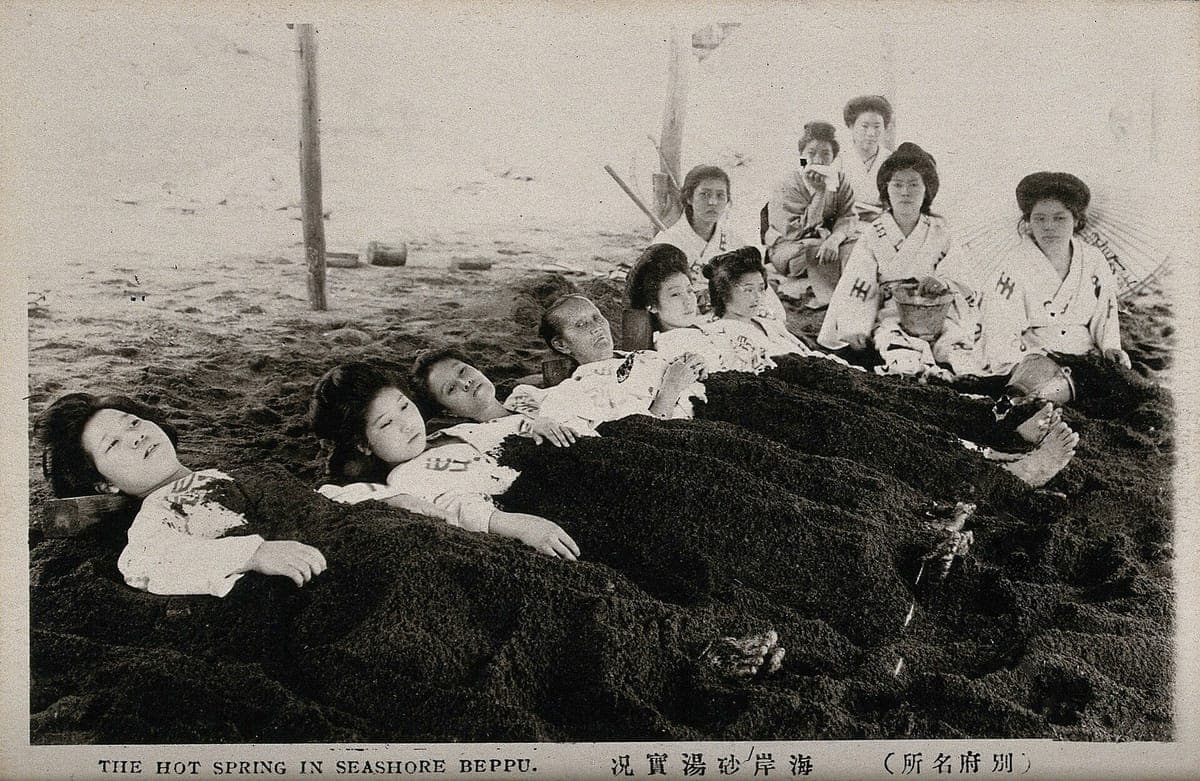
Beppu is famous for its inland bathhouses and "hells," but this seaside sand bath on the Shoningahama waterfront is something different. Inside Shonin Park, attendants bury you in naturally geothermal-heated sand while you lie on the beach with Beppu Bay stretching out in front of you—the modern successor to the historic Beppu Kaihin Sunayu on the same site. It's a proper coastal onsen experience, and it's at its best as the sun goes down over the water.
Getting there: From Beppu Station, a Kamenoi Bus toward Shoningahama gets you there in about 20–25 minutes. Admission ¥2,500 (the sand bath is bundled with the grand bath). Best year-round, especially at sunset.
Shitanyu, Yufuin (Oita)
Shitanyu is a rustic, thatched-roof public bathhouse sitting right on the shore of Lake Kinrin, with two small mixed pools and an open-air rear section facing the lake and forest. It's one of the last old-style communal onsen still open to visitors in the centre of Yufuin—a town that can feel polished and busy, yet here you're metres from the misty lake in a bath that has barely changed. There are no changing rooms, so bring your own towel and some coins.
Getting there: From Yufuin Station, it's a 20–25 minute walk along Yunotsubo Kaido to the Lake Kinrin shore—easily done on foot, no car needed. Admission ¥300, dropped into the honesty box at the entrance. Best year-round; cold-weather mornings pair beautifully with the lake mist.
05Kagoshimahidden gem
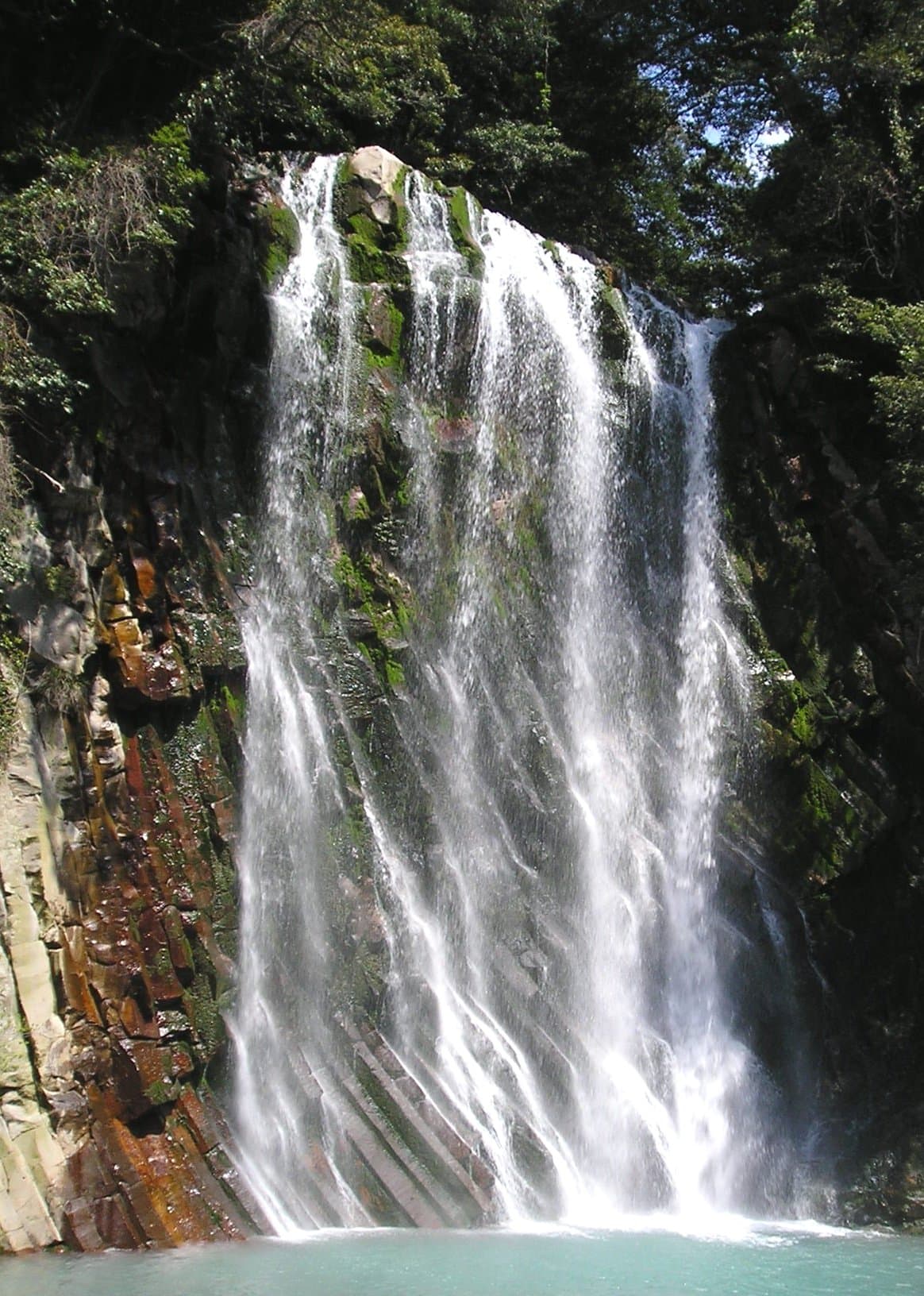
Maruo Falls, Kirishima (Kagoshima)
丸尾の滝
A fitting finale for a hot-spring tour: an actual hot-spring waterfall. In the Kirishima onsen district, the 23-metre Maruo Falls is fed by four upstream hot springs, so on a cold day the whole cascade visibly steams. It sits on the road between Maruo Onsen and Kirishima Shrine—an only-in-Kirishima curiosity that most people drive straight past, which means the roadside viewpoint is usually yours alone.
Getting there: From Kirishima-Jingū Station on the JR Nippō Line, a bus reaches the falls in about 40 minutes total. Free roadside viewing platform.
When to go
This is a year-round list, but autumn and winter reward it most. Cold air is what makes a hot spring feel transcendent—steam rising off amber water at Tokachigawa, snow framing the platform bath at Ani-Maeda, mist hanging over Lake Kinrin at Shitanyu, and Maruo Falls visibly steaming in the chill. Autumn adds foliage along the Tokachi River and through the hills around Naruko. If you're chasing warm water and a beach in the same trip, aim for late spring to early autumn so Sensuijima's swimming and coastal trail are at their best. Whenever you go, checking each town's local train and bus timetable the night before saves the one thing that trips up car-free travel: a last connection that leaves earlier than you'd guess.
Keep exploring
- Hidden winter onsen — where cold-season hot springs are at their most magical.
- Kyushu onsen towns nobody knows — go deeper on Beppu, Yufuin, and the far south.
- Japan by local train — more slow, car-free routes through the countryside.
- The Izu Peninsula Loop — Shuzenji and Atami without driving.
- The Great Onsen Ryokan Splurge — if you only splurge once, spend it here.
Ready to plan? Build your own hidden-Japan itinerary → — our trip generator turns any of these spots into a day-by-day route.