Multi8 min read
The Great Onsen Ryokan Splurge: Where to Spend Your One Big Night in Japan
The best onsen ryokan japan splurge is about WHERE you book — 10 hot-spring towns and baths worth one expensive night, from lamp-lit Aoni to Ginzan's snow.
Best time: Year-round (best: winter)
The Great Onsen Ryokan Splurge: Where to Spend Your One Big Night in Japan
Most Japan trips have room for exactly one extravagance. Spend it on a hot-spring inn. A night at a ryokan is the rare luxury that isn't really about the room — it's about the water, the valley the water sits in, and the hours between four in the afternoon and eight the next morning, when the day-trippers are gone and the town belongs to people in yukata and wooden sandals.
Here's the thing nobody tells you: the inn matters less than the place. A merely good ryokan in a spectacular onsen town beats a famous one in a dull one. So this guide names no inns and quotes no room rates — we don't track those, and we won't invent them. It does something more useful: it picks the ten hot-spring destinations where one expensive night is genuinely worth it, tells you what the water and the setting are actually like, and lets you book whichever inn there suits your budget. Where a bath publishes a day-use fee, we list it — so you can taste a place before committing, or add a second soak to your splurge day.
01Yamagata
Ginzan Onsen
銀山温泉
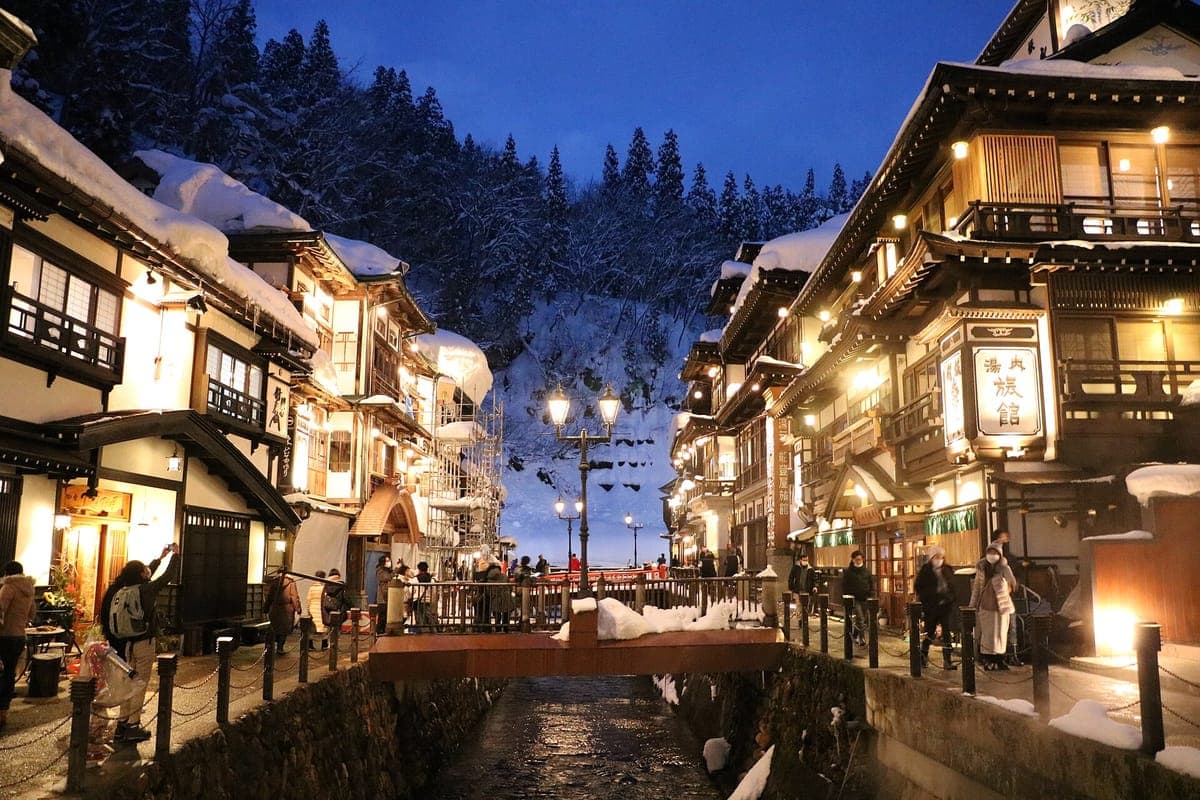
If you only see one onsen town in your life, make it this one. Ginzan is a Taisho-era village of wooden ryokan facing each other across a narrow river, lit at night by gas lanterns — and in winter, with snow banked up against the timber facades and steam rising off the street, it looks less like a real town than a memory of one. It is genuinely remote, which is why most travellers stuck on the Tokyo–Kyoto line never see it, and why the ones who do arrive tend to book their night months out. This is the archetypal splurge: a room facing the lantern-lit street, dinner in-house, and a walk through the snow afterwards.
Getting there: From Yamagata City, take the Yamagata Shinkansen to Oishida Station, then a bus to Ginzan Onsen; about 1h 53m by car from Sendai Station. Best in winter.
02Tochigi
Yunishigawa Onsen
湯西川温泉
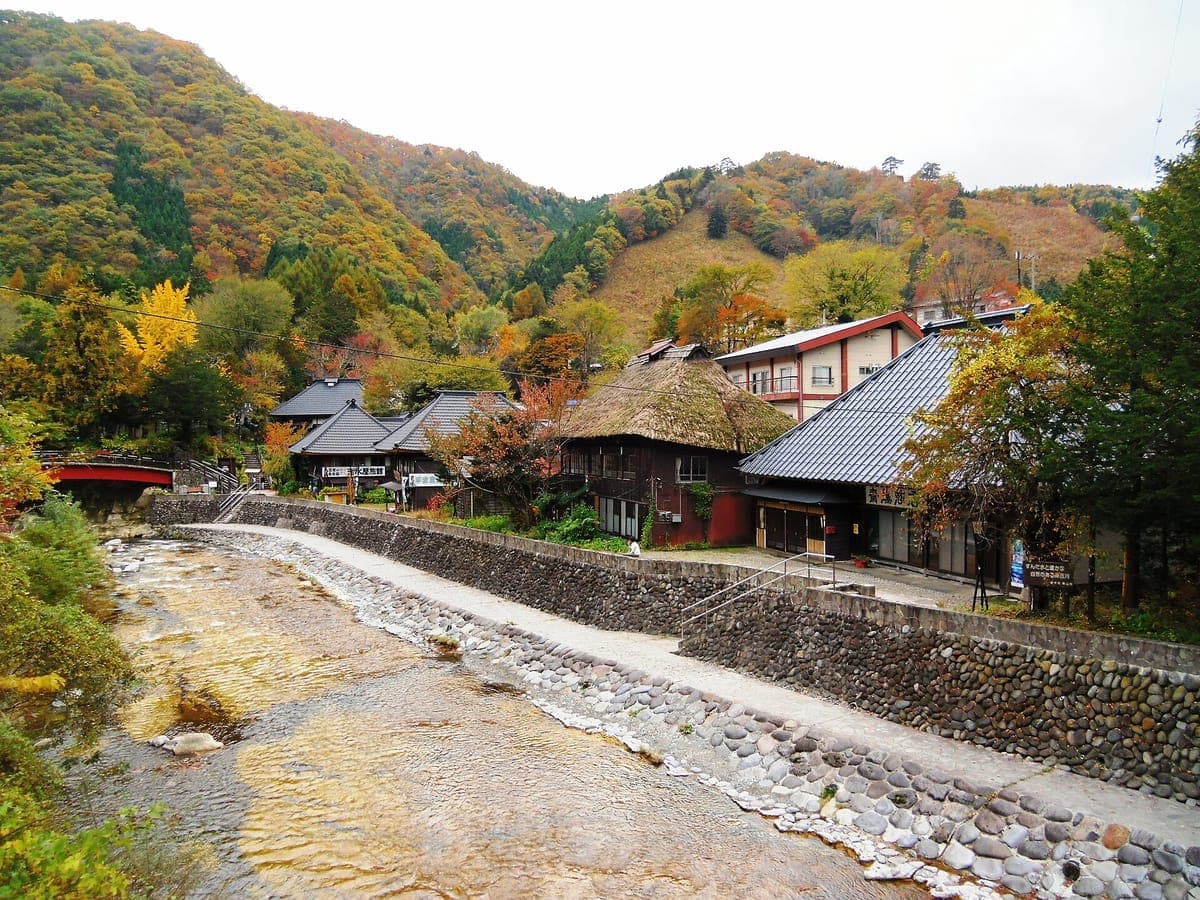
Yunishigawa's story is its selling point: this tranquil Tochigi valley sheltered the exiled Heike clan after the Genpei War, and the town has been quietly hiding in the mountains ever since. Its signature is the winter snow-lantern festival, when hundreds of lanterns are lit across the snowy landscape — a spectacle you want to walk out into after dinner, in a yukata, from a room a hundred metres away. It stays overlooked in favour of the big Kanto hot-spring names, which is precisely why a splurge night here feels private rather than packaged.
Getting there: From Tokyo, take the JR Tohoku Shinkansen to Utsunomiya, transfer to the JR Nikko Line to Nikko, then a bus to Yunishigawa Onsen; roughly 3h by car from Tokyo Station. Best in winter.
03Aomori
Aoni Onsen
青荷温泉
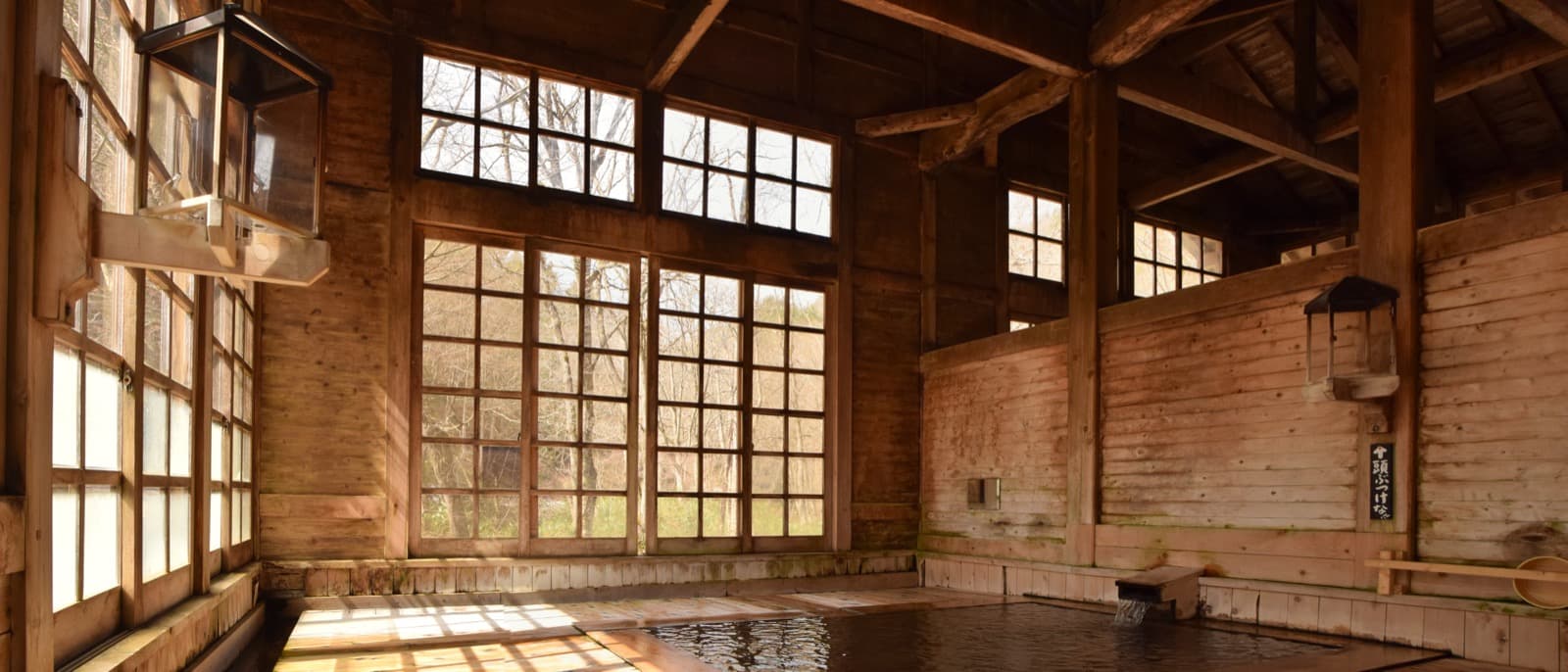
The anti-luxury luxury. Aoni is a "secret hot spring" deep in a forested valley in the Hakkoda foothills, reached by a single mountain road, and its guest areas have no electricity at all — the whole place is lit by oil lamps after dark. Four separate wood and rock baths run on source-fed (kakenagashi) simple-spring water. What you are paying for here is not thread count; it is the near-total absence of the modern world for fourteen hours. If a night is beyond you, day bathing is possible.
Getting there: From Kuroishi Station (Konan Railway), take the Konan Bus toward Nijinoko Koen, then transfer to the onsen's own free shuttle — reservation required, and mandatory from 1 December to 31 March. Day-use bathing: ¥1,000 per adult (revised from ¥600 on 1 April 2026); day-use hours are not published, so call ahead on 0172-54-8588 to confirm.
04Aomori
Sukayu Onsen
酸ヶ湯温泉
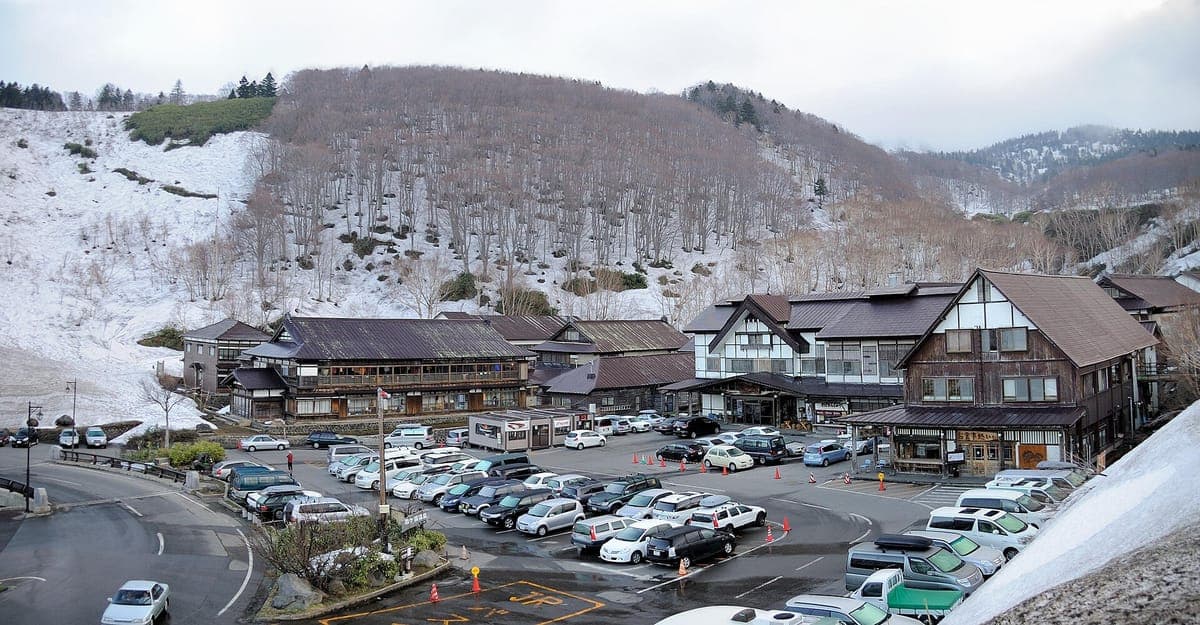
Also in Aomori, and the exact opposite of Aoni: Sukayu is famous for the Hiba Sennin-buro, an enormous mixed cypress bath said to hold up to a thousand bathers, ringed by cedar forest in the heart of Japan's snow country. Soaking in a cathedral of hinoki while a blizzard works on the roof is one of the great Japanese winter experiences, and its remoteness keeps it off most foreign itineraries. Note that the great bath is konyoku (mixed) — the tradition is part of the point, and there are separate options.
Getting there: From Aomori City, take a bus to Sukayu Onsen (about 2 hours); roughly 4h 28m by car from Sendai Station. Day-use bathing: ¥1,000 for adults, towel included, 7:00–18:00 daily. Best in winter.
05Aomori
Furofushi Onsen
黄金崎不老ふ死温泉
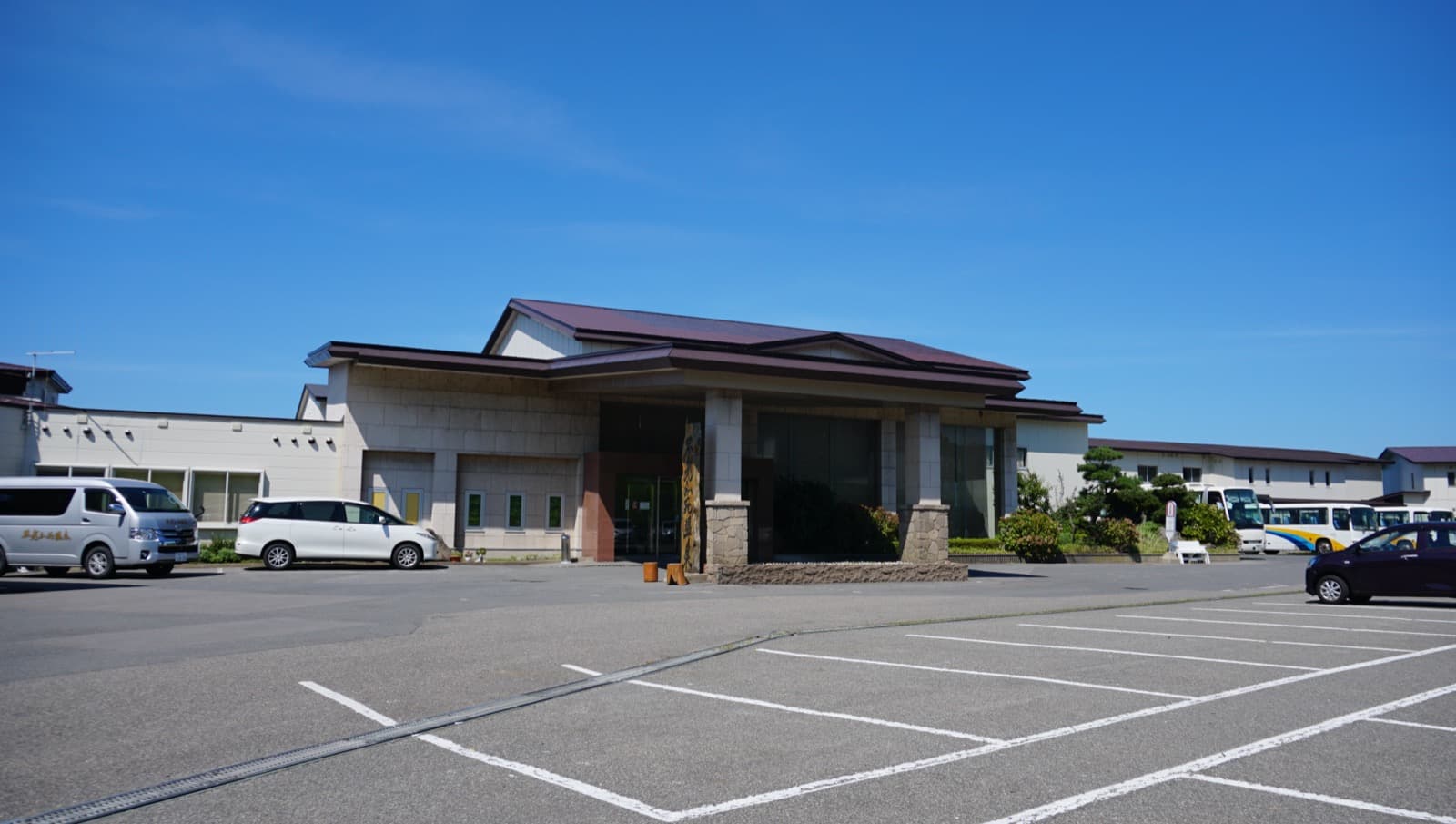
The one for a sunset. On the Sea of Japan coast at the foot of the Shirakami-Sanchi range, Furofushi has a gourd-shaped open-air bath built directly at the waterline — waves break metres away, the iron-rich water turns reddish-brown as it meets the air, and the sun drops into the sea in front of you. It is one of Japan's most photographed ocean-front baths and still gets skipped, because reaching it means a dedicated detour off the scenic Gono Line.
Getting there: Take the JR Gono Line (the Resort Shirakami scenic train is the way to do it) to Henashi or Wespa Tsubakiyama Station, then walk or take the hotel shuttle — reservation required. Day-use bathing: ¥1,000 per adult, ¥500 for elementary-age children; day bathing 9:00–19:00, last entry 18:30 at the main-building bath.
06Kumamoto
Tarutama Onsen
垂玉温泉
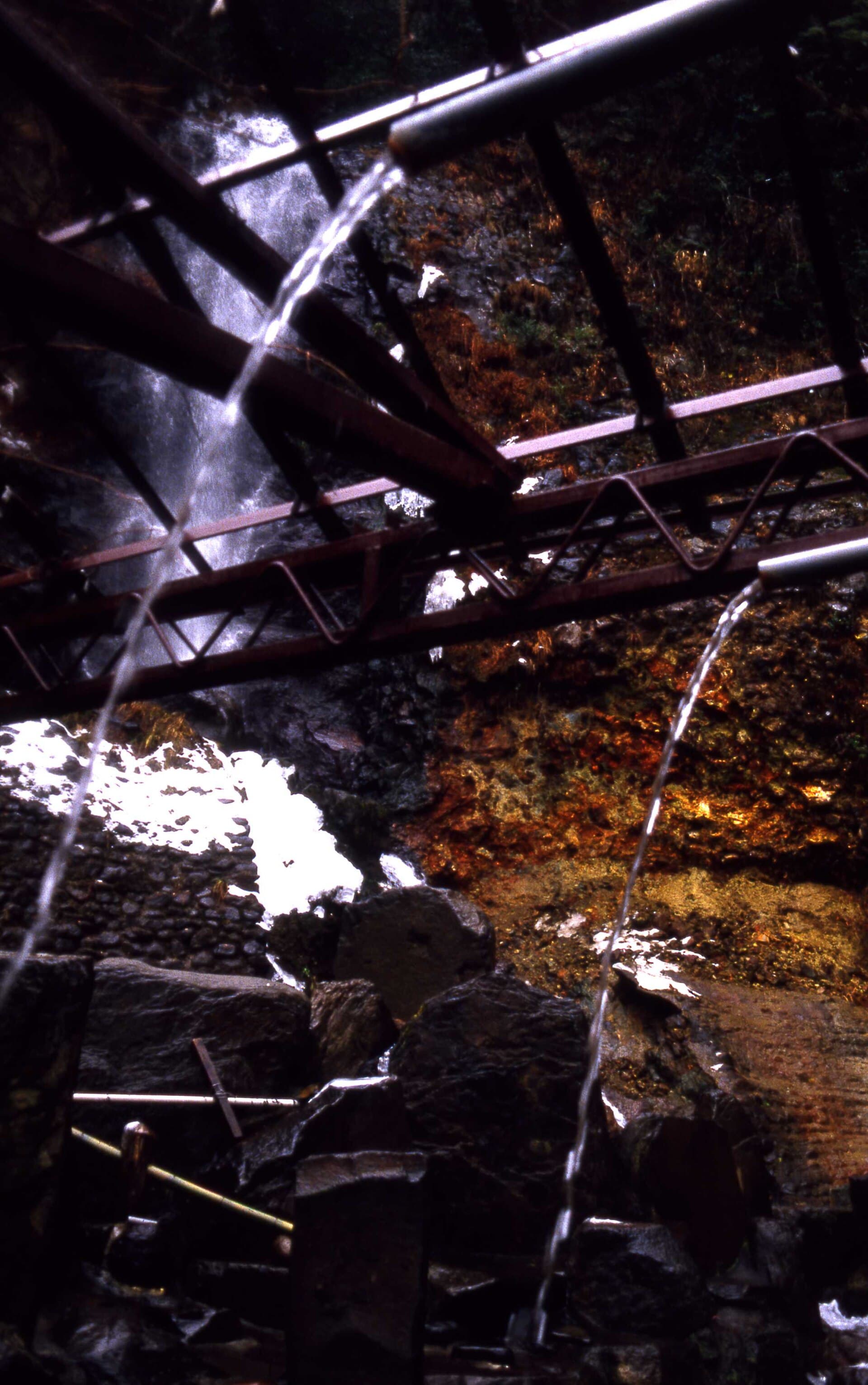
Inside the Aso caldera, on the western slope of the central cones, Tarutama is a remote hydrogen-sulfide spring whose open-air bath has sat beside the cascading Kinryu Falls for over a century. A waterfall-side rotenburo is a rare thing even in Japan, and this one is atmospheric in a way the bigger Kumamoto onsen towns aren't — especially in autumn foliage or under light snow. If your splurge night is anywhere in the caldera, this is the bath to build the evening around.
Getting there: A car is essentially required — about 15 minutes' drive from Aso Shimodajo Station (Minami-Aso Railway) or 30 minutes from JR Aso Station. Day-use bathing: ¥1,000 (up to ¥1,200 on peak days), 10:00–19:00, closed Wednesdays.
07Gunma
Shima Onsen
四万温泉
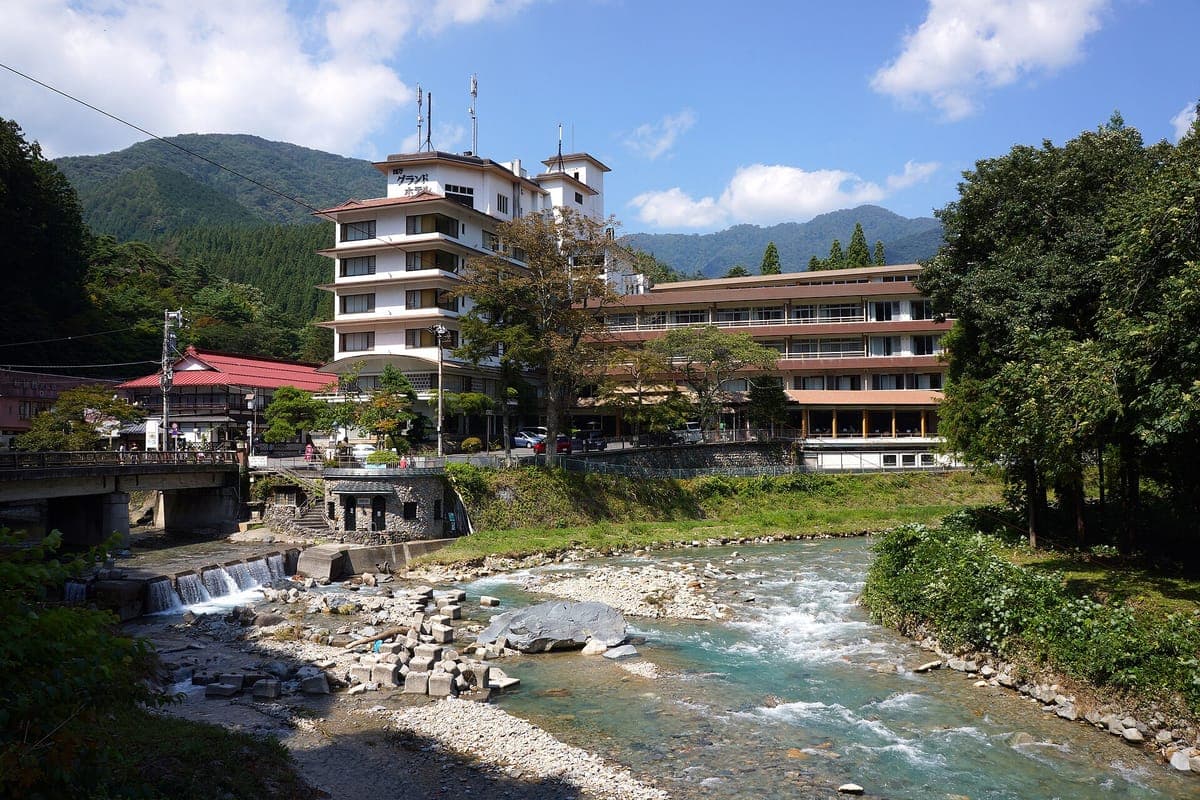
Gunma's Shima is the quiet, green, unhurried version of the splurge — a hot-spring village strung along a river, known for high-quality sulfuric water long credited with healing properties, with walking trails following the water out of town. There are no crowds to escape and nothing to queue for; you soak, you walk the river, you eat, you soak again. It is passed over for the famous Kanto names, which is the entire reason it works.
Getting there: Train to Nakanojo Station, then a short bus ride into the village; about 2h 38m by car from Tokyo Station. Best in spring and autumn.
08Hyogo
Kinosaki Onsen
城崎温泉
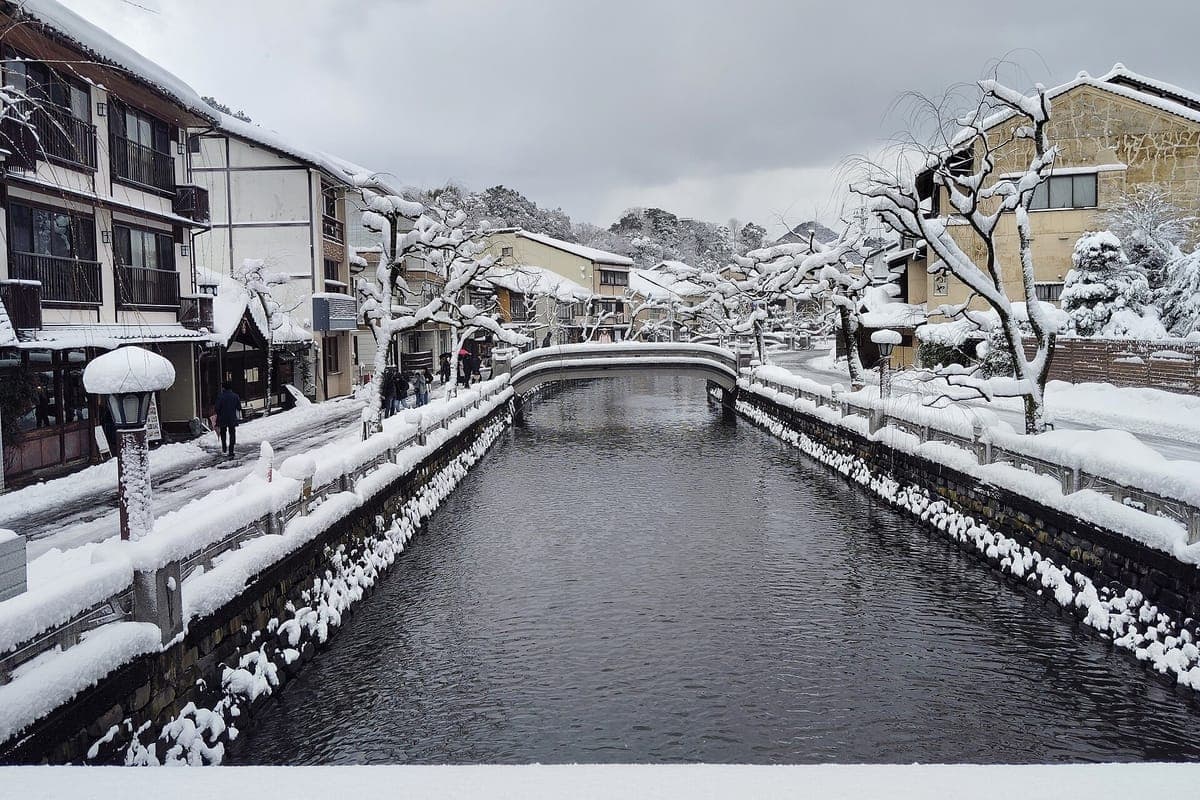
Kinosaki is the town that turns a hot-spring stay into a whole evening's theatre. Guests check in, change into yukata and geta, and spend the night wandering willow-lined streets between seven distinct public bathhouses — each with its own character — before drifting back to their inn. Because the bath-hopping is the entertainment, it's the one destination on this list where the town does half the work for you, and the reason to spend money here is simply to be inside it overnight rather than passing through.
Getting there: Reachable by train from Osaka or Kyoto in roughly 2.5 to 3 hours; Kinosakionsen Station is a 7-minute walk from the town centre, and it is about 2h 29m by car from Shin-Osaka Station. Best in spring or autumn.
09Gifu
Gero Onsen
下呂温泉
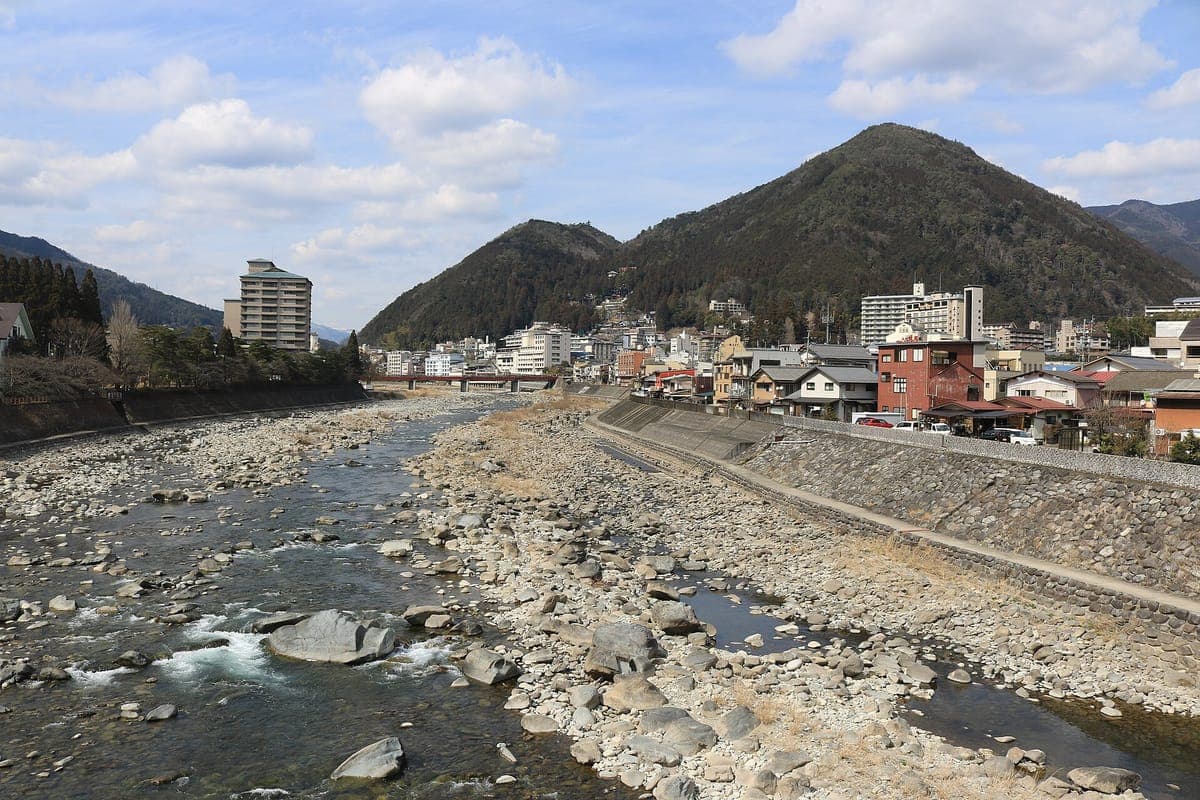
Counted among Japan's three great onsen, Gero sits against the backdrop of the Hida mountains with a mix of traditional inns and public baths drawing on famously mineral-rich, silky water. It is the most convenient serious splurge on this list — a straight run up the JR Takayama Line — and yet foreign visitors keep defaulting to Hakone. Pair it with the Hida highlands and time it for autumn, when the foliage comes down the valley walls.
Getting there: Take the JR Takayama Line from Nagoya to Gero Station (about 2.5 hours); the town is a 7-minute walk from the station, or about 2h 3m by car from Nagoya. Best in autumn.
10Ehime
Dogo Onsen
道後温泉
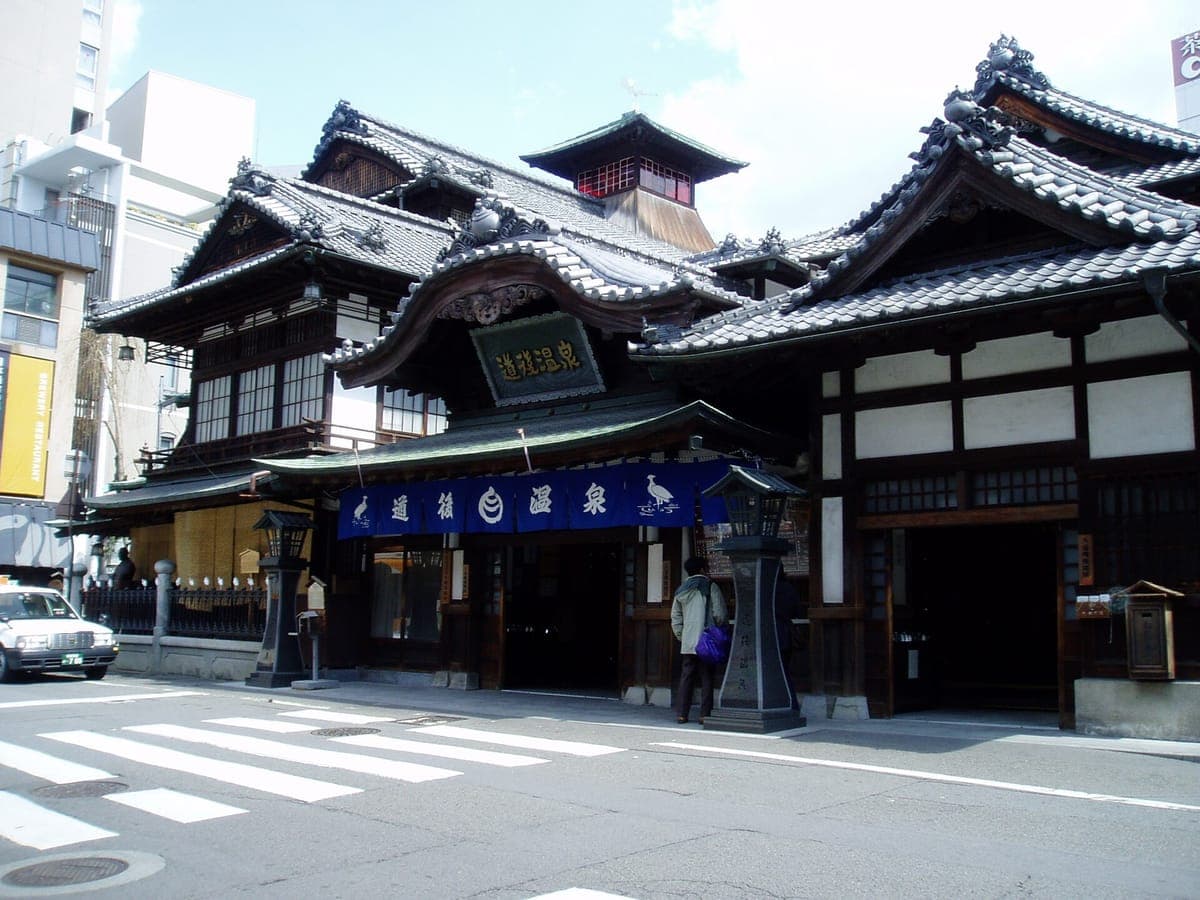
The oldest splurge in Japan. Dogo, in Matsuyama, is one of the country's most ancient hot springs, and its Honkan bathhouse — a stacked, castle-like wooden confection that has been inspiring writers and artists for over a century — is a monument you get to bathe inside. Most travellers never cross to Shikoku at all, which is their loss. Stay in the surrounding onsen quarter and take the Honkan slowly, in the early morning.
Getting there: Train to Matsuyama Station, then a local bus or tram to Dogo Onsen; about 2h 19m by car from Takamatsu Station. Day-use bathing: entry to the Honkan starts at ¥700, with tiered tickets rising to ¥2,500 and above depending on which baths and rooms you use; open 6:00–22:00, last entry around 21:00. Best in spring.
What you're actually paying for
An onsen ryokan night is a package, not a room. It typically bundles dinner and breakfast (a multi-course kaiseki-style meal is the norm at the higher end), a yukata to wear all evening, futon laid out for you while you eat, and unlimited use of the baths — which is why arriving at 3pm and leaving at 10am is the intended use, not laziness. Rates are usually quoted per person, per night, with two meals, not per room; that trips up a lot of first-timers.
When comparing inns in the town you've chosen, the things worth paying up for are: a rotenburo (open-air bath) rather than indoor-only; a kashikiri private bath you can reserve, which solves both shyness and tattoos; a view that means something in your season — the river, the snow, the sea; and kakenagashi water, flowing straight from the source rather than recirculated. Book early: the good rooms in these towns go months ahead, and faster in winter.
Etiquette, briefly: wash and rinse thoroughly at the seated showers before getting in — the bath is for soaking, not cleaning. No swimsuits. The small towel never touches the water; park it on your head or the rock. Tie long hair up. Many inns and public baths still refuse tattoos, so check before booking, or choose a place with a private bath. Go slowly: the water is hotter than you think.
Related guides
- Hidden Winter Onsen — the snow-country baths that never make the lists, if you want the atmosphere without the price tag.
- Onsen Towns You Can Reach Without a Car — the same night out, planned entirely around trains and buses.
- Kyushu's Quiet Onsen Towns — the warm south, where the hot-spring town density is highest in Japan.
- Rural Stays: Shukubo & Farmhouse Japan — the other great overnight splurge, for temples and thatched roofs instead of water.
Ready to plan? Build your own hidden-Japan itinerary → — our trip generator turns any of these spots into a day-by-day route.