Chubu8 min read
The Izu Peninsula Loop: A Hidden Coast-and-Onsen Circuit
An Izu Peninsula itinerary that loops the coast — Atami's baths, the Jogasaki cliffs, Shimoda's black-ship port, Matsuzaki, Dogashima's sea caves and Shuzenji.
Best time: Year-round (best: spring & autumn)
Izu hangs off the Shizuoka coast like a thumb pressed into the Pacific, close enough to Tokyo that the Shinkansen delivers you to its northern gate in under an hour — and yet most visitors never get past that gate. They soak in Atami, take the photo, and go home. The peninsula's real pleasure is the loop: down the sheer eastern cliffs, around the southern cape where Japan was prised open to the world in 1854, then up a west coast of sea caves and wooden-walled fishing towns, and finally inland through bamboo and hot-spring valleys to close the circle. Do it clockwise and the sun is on the water when you want it: Pacific mornings on the east side, Suruga Bay sunsets on the west. Everything below is a real place with real access details — eight stops, no invented scenic overlooks. Two or three days is the honest minimum. Here's the circuit, in order.
01Shizuoka
Atami Onsen
熱海温泉
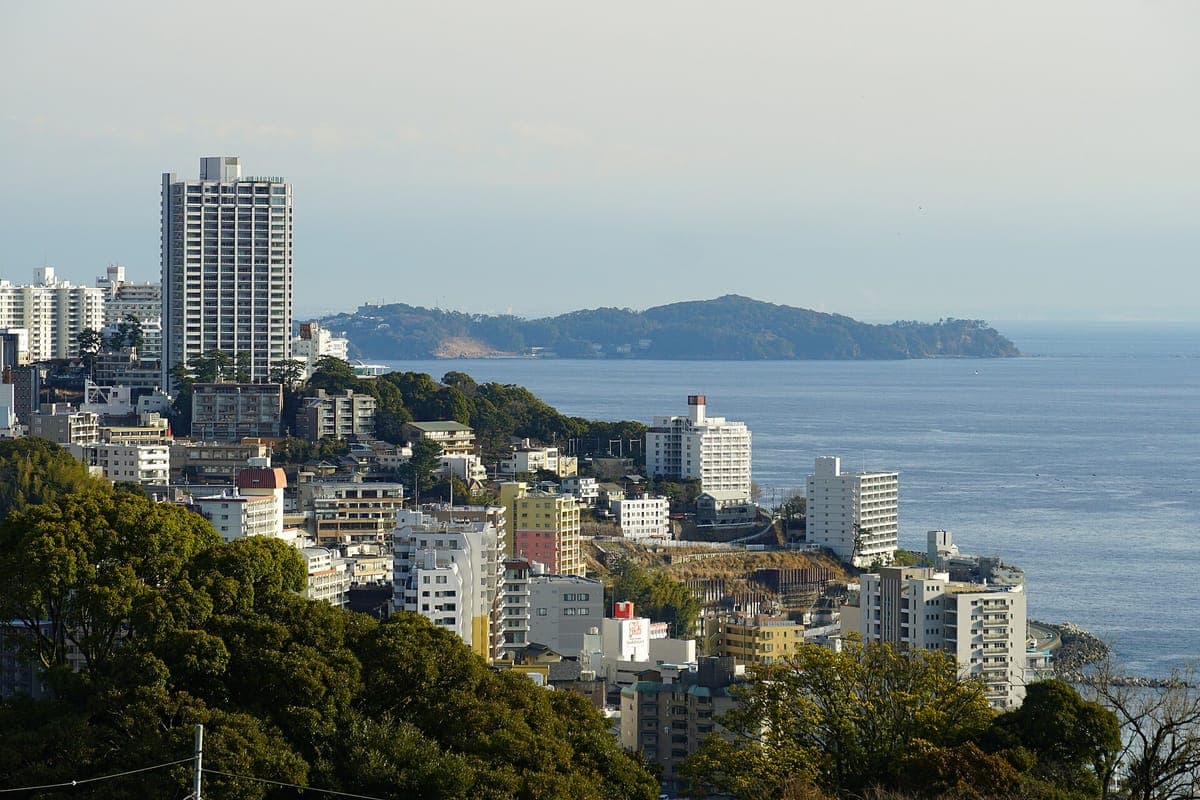
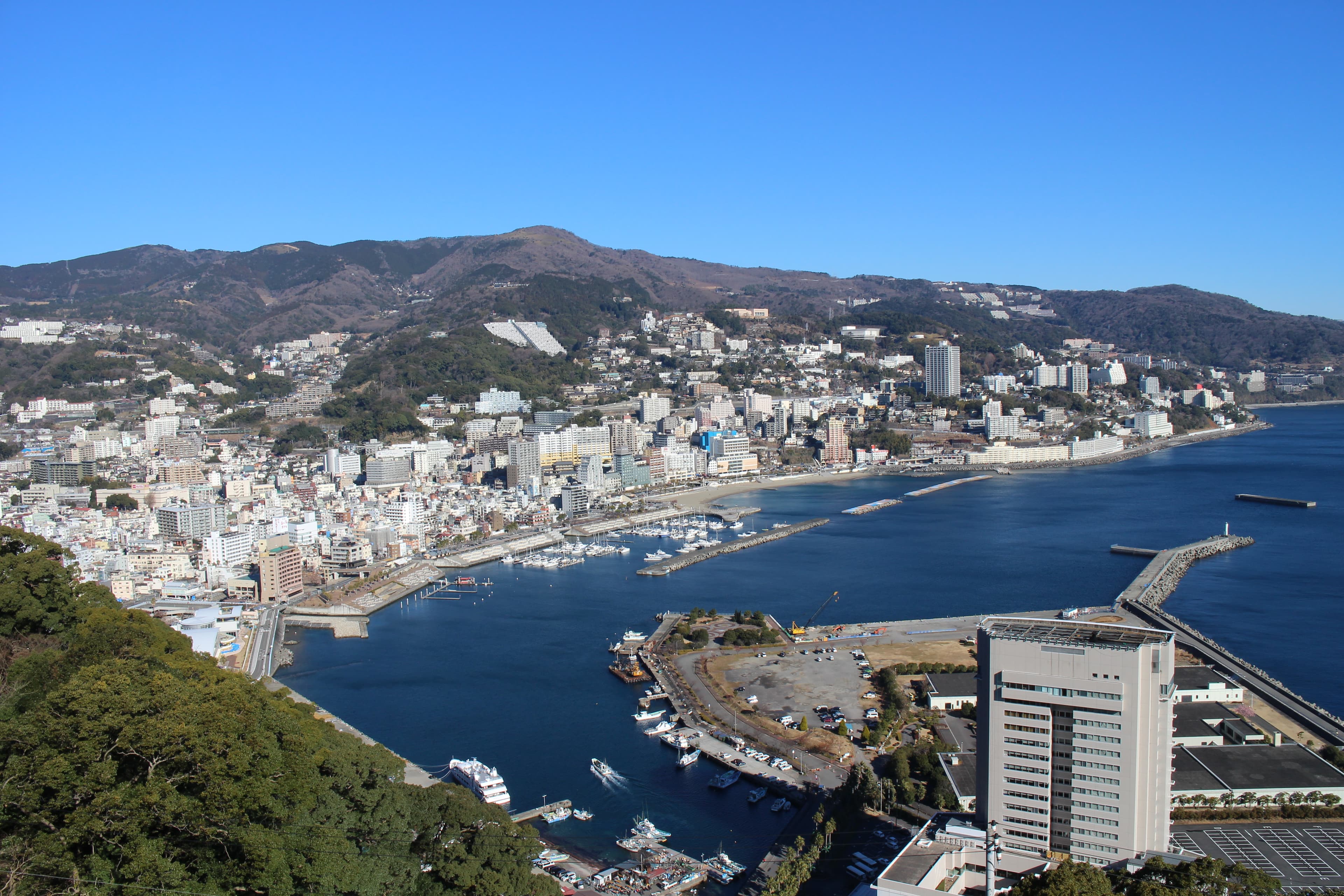
Start where the peninsula starts. Atami is a hot-spring resort built into the hillsides above its own harbour, and its particular trick is combining ocean views with the baths — you soak looking at water. It has cherry blossoms in spring and festivals through the year, and it is the one Izu name most travellers do recognise, which is exactly why they treat it as a destination rather than a doorway. Come for a night, use it as your northern anchor, and let it hand you off to the coast road south. Its own reputation works against it: plenty of travellers skip Atami entirely in favour of the more famous hot-spring towns like Hakone, which keeps the streets here more workaday and less staged.
Getting there: Easily accessible via the Tokaido Shinkansen from Tokyo, taking about 50 minutes. Nearest station: Kinomiya Station, 13 minutes on foot.
02Shizuokahidden gem
Atami Geisha District
熱海芸妓街
Before you drive out, walk fifteen minutes uphill. Atami still keeps a working geisha quarter — a preserved pocket of historic wooden buildings on quiet streets near the MOA Museum, and one of the few places in Japan outside Kyoto where that culture survives in the open rather than behind a paywall. It is calm in a way the seafront is not, and it is best in the morning, when the district's rhythm still belongs to the town's bathhouse routine rather than to visitors. Almost everyone arriving in Atami heads straight for the famous sights and never climbs this far, which is precisely the point.
Getting there: Take the train from Tokyo to Atami Station, then walk to the district. Nearest station: Kinomiya Station, 24 minutes on foot. Open 10:00–15:00 on weekdays, from 09:00 at weekends.
03Shizuoka
Jogasaki Coast
城ヶ崎海岸
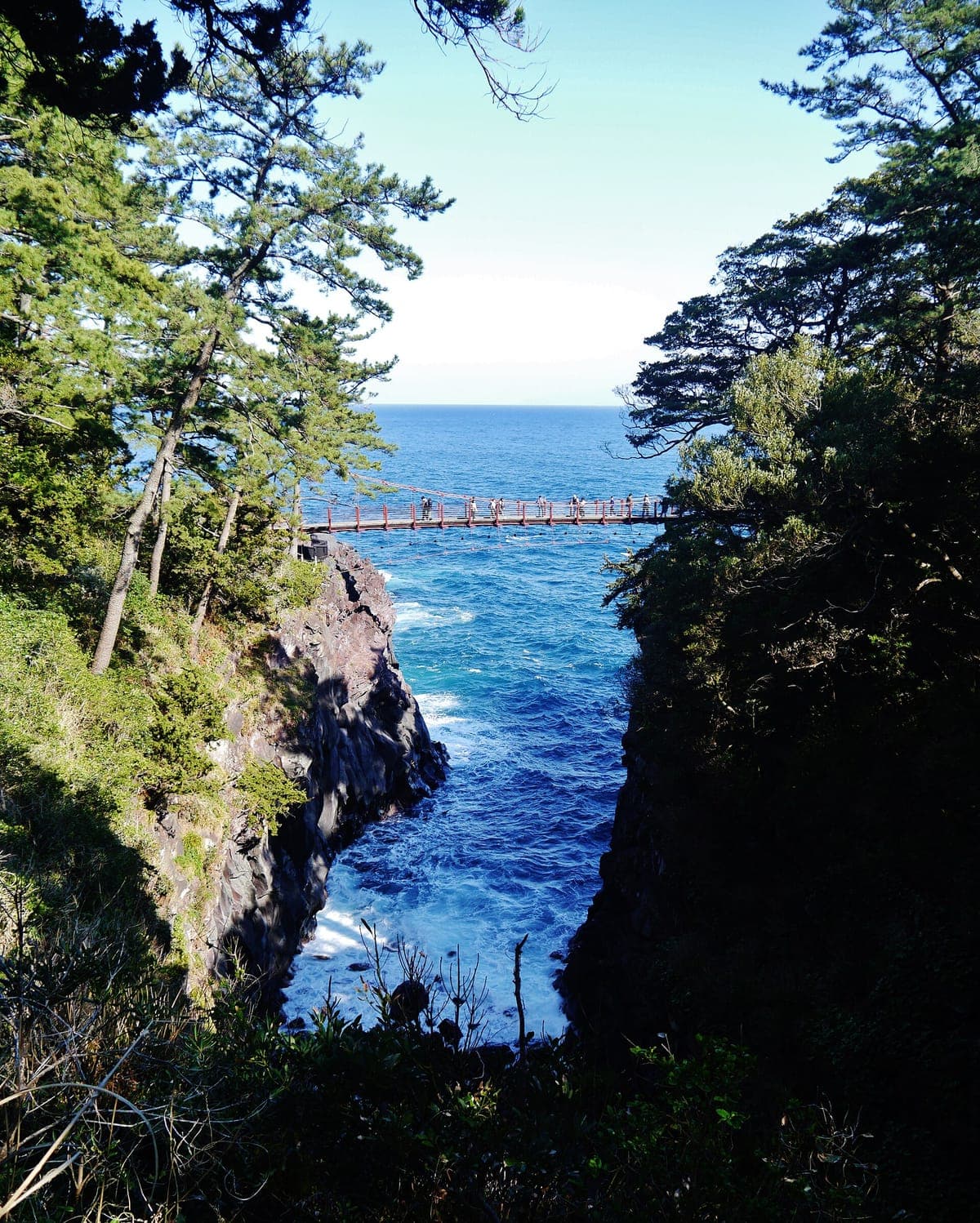
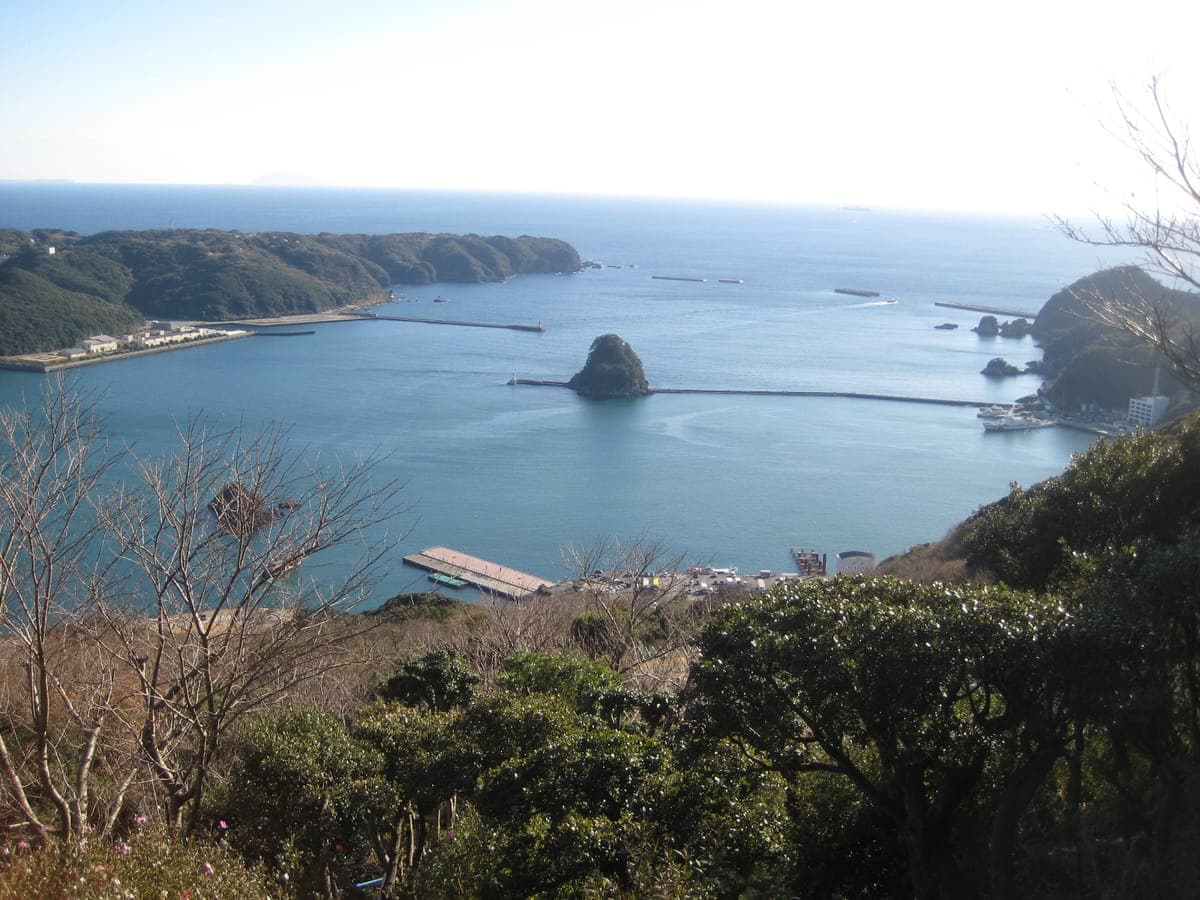
Head south along the eastern shore and the peninsula's volcanic bones surface. Jogasaki is a stretch of lava cliffs dropping straight into the Pacific, strung with walking trails that trace the edge past strange rock formations and open blue water. It is the loop's best leg-stretch: an hour or three on foot depending on how far you follow the coast path, with the ocean loud below you the whole way. Most people racing to Shimoda pass the turn-off entirely. The trails are open around the clock, so an early start here buys you the cliffs to yourself.
Getting there: Take a train to Ito Station, then a short bus or taxi to the coast. Nearest station: Jōgasaki-Kaigan Station, though it's a 42-minute walk from there to the coast itself — this stop is far easier with a car. Best in spring.
04Shizuokahidden gem
Shimoda Black Ships Port
下田黒船港
Keep going south and the road runs out at Shimoda, on the peninsula's southern tip — and at the single most consequential harbour in modern Japanese history. This is where Commodore Perry's black ships landed in 1854 and forced open a country that had been closed for over two centuries. The waterfront is scenic and low-key, dotted with monuments to that moment, and the extraordinary thing is how quiet it is: the country's hinge point, and no crowds, because everyone is in Tokyo and Kyoto. It's the natural place to break the loop and sleep.
Getting there: From Tokyo, take the JR Tokaido Shinkansen to Atami, transfer to the Ito Line to Ito Station, then the Izu Kyuko Line to Shimoda Station. The port is a 7-minute walk from Izukyū-Shimoda Station. The waterfront and its monuments are free; the Black Ship sightseeing cruise is a separate paid ticket.
05Shizuokahidden gem
Matsuzaki
松崎町
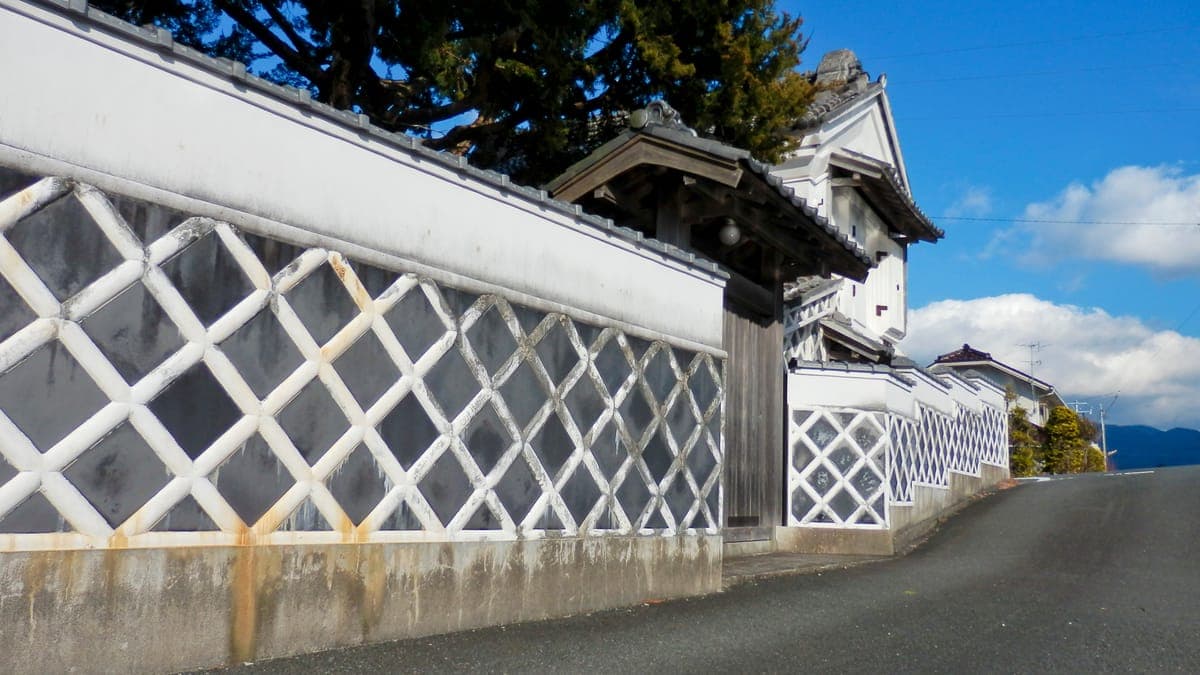
Round the cape and turn north up the west coast, and the peninsula changes character completely — quieter, older, facing Suruga Bay instead of the open Pacific. Matsuzaki is the loveliest expression of it: a small coastal town of traditional wooden houses with long views back across the Izu shore. Nothing here is engineered for visitors. You wander the streets and the seafront, you eat, you look at the water. Mainstream itineraries fixate on Izu's bigger names and skip this one entirely, which is what has preserved it.
Getting there: Take a train to Izukyū-Shimoda Station, then a local bus to Matsuzaki — the natural west-coast continuation if you're travelling by rail rather than car. There's no admission to walk the streets or the coast; individual attractions may charge.
06Shizuoka
Dogashima Sea Caves
堂ヶ島海岸
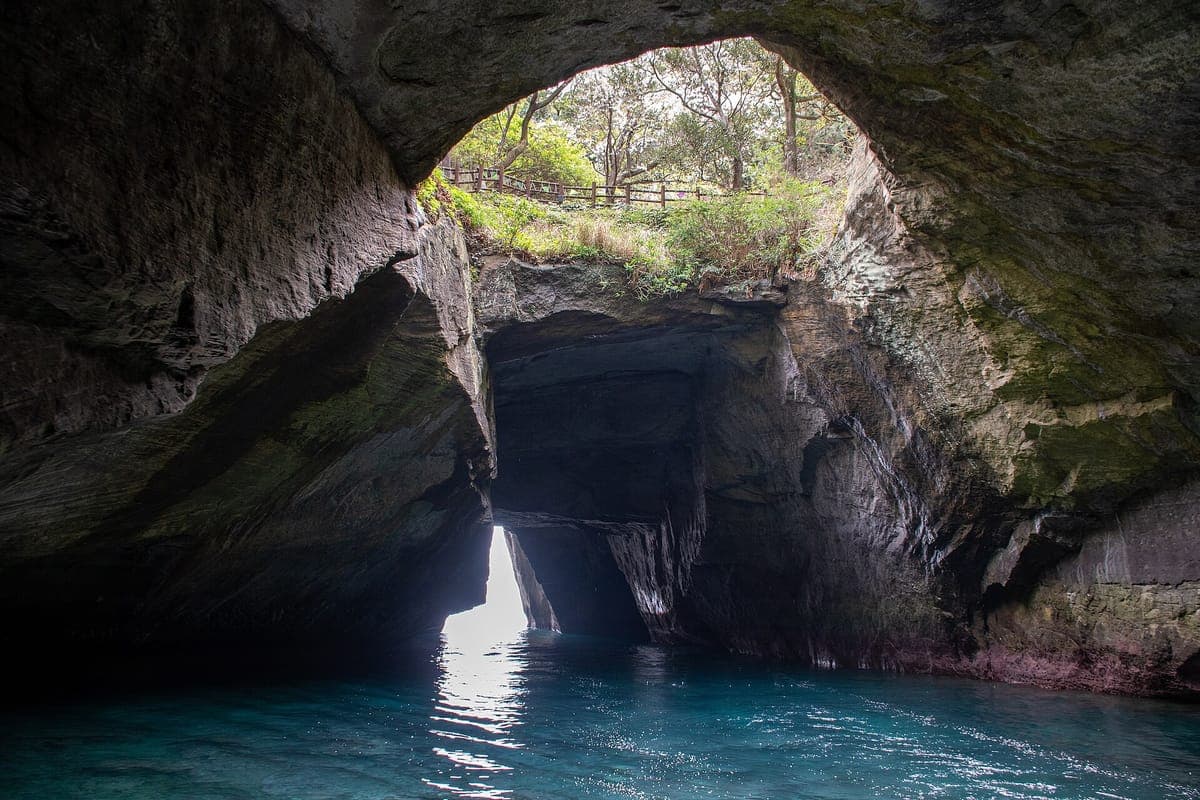
A little further up the same coast, the shoreline shatters into islets and sea caves. Dogashima's showpiece is a cave system whose collapsed ceiling forms a natural skylight, dropping a shaft of daylight into the water inside — you go in by boat, and the cruise threads through the rock formations and back out along the coastline. This is also the peninsula's great sunset stretch, with the sun going down over open sea. It's the most spectacular thing on the loop, and the reason to time your west-coast day so you arrive in the late afternoon.
Getting there: From Tokyo, take the Tokaido Shinkansen to Atami Station, then transfer to the Izu Kyuko Line. The coastal viewpoints are free; the caves (Tensodo) are reached by the official cave cruise — adult ¥1,500 for roughly 20 minutes. Best in spring and autumn.
07Shizuoka
Shuzenji Onsen
修善寺温泉
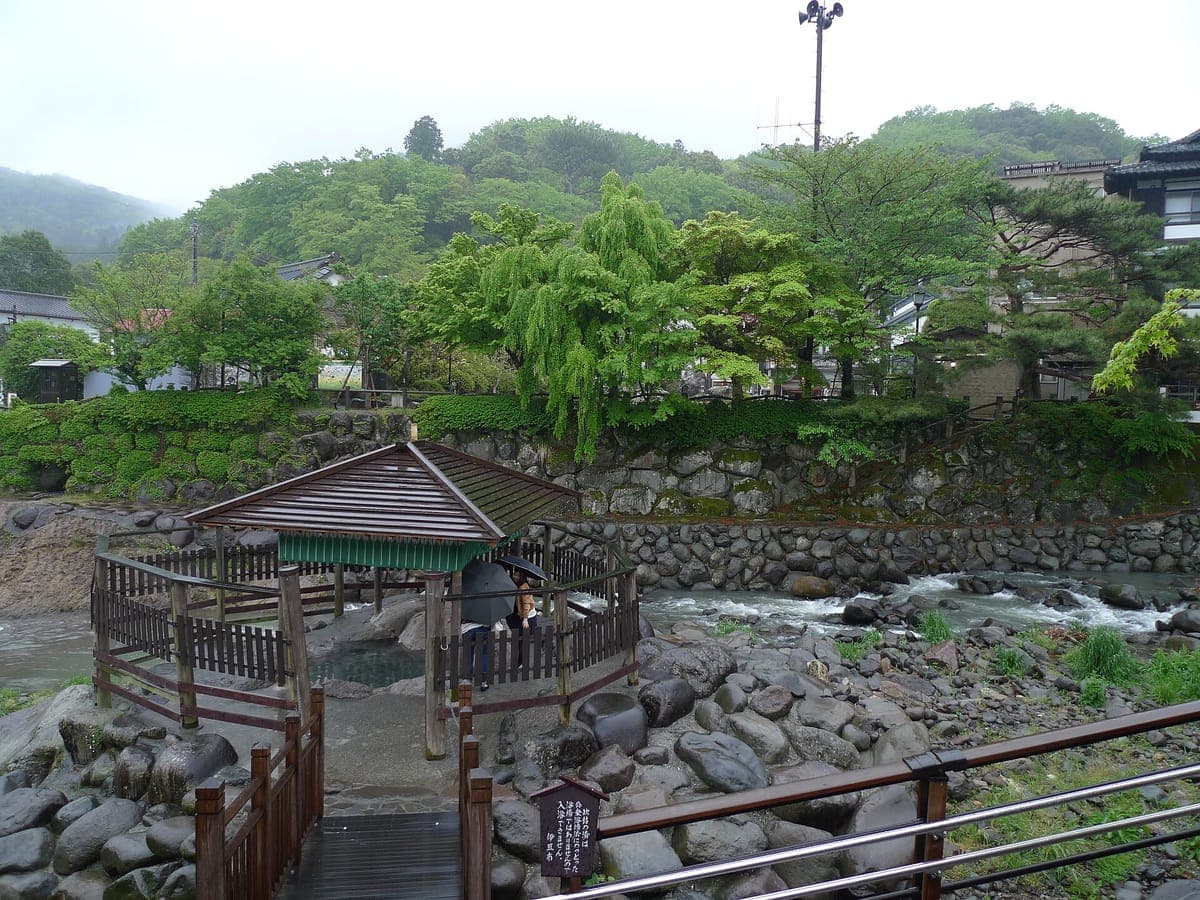
Now turn inland and climb into the middle of the peninsula to close the loop. Shuzenji is a historic hot-spring town in a wooded river valley, whose waters have been in use since the 8th century — a thousand-plus years of people arriving tired and leaving loose. It's a ryokan town: you check in, you bathe, you walk the riverside in a yukata, you bathe again. Bigger, louder onsen resorts elsewhere pull the crowds away, and Shuzenji is quietly grateful. Make it your last night before heading north.
Getting there: Take the train from Tokyo to Shuzenji Station, then a short bus. Nearest station: Ōhito Station. Best in spring and autumn.
08Shizuoka
Bamboo Forest Path and Shuzenji Temple
竹林の小径と修善寺
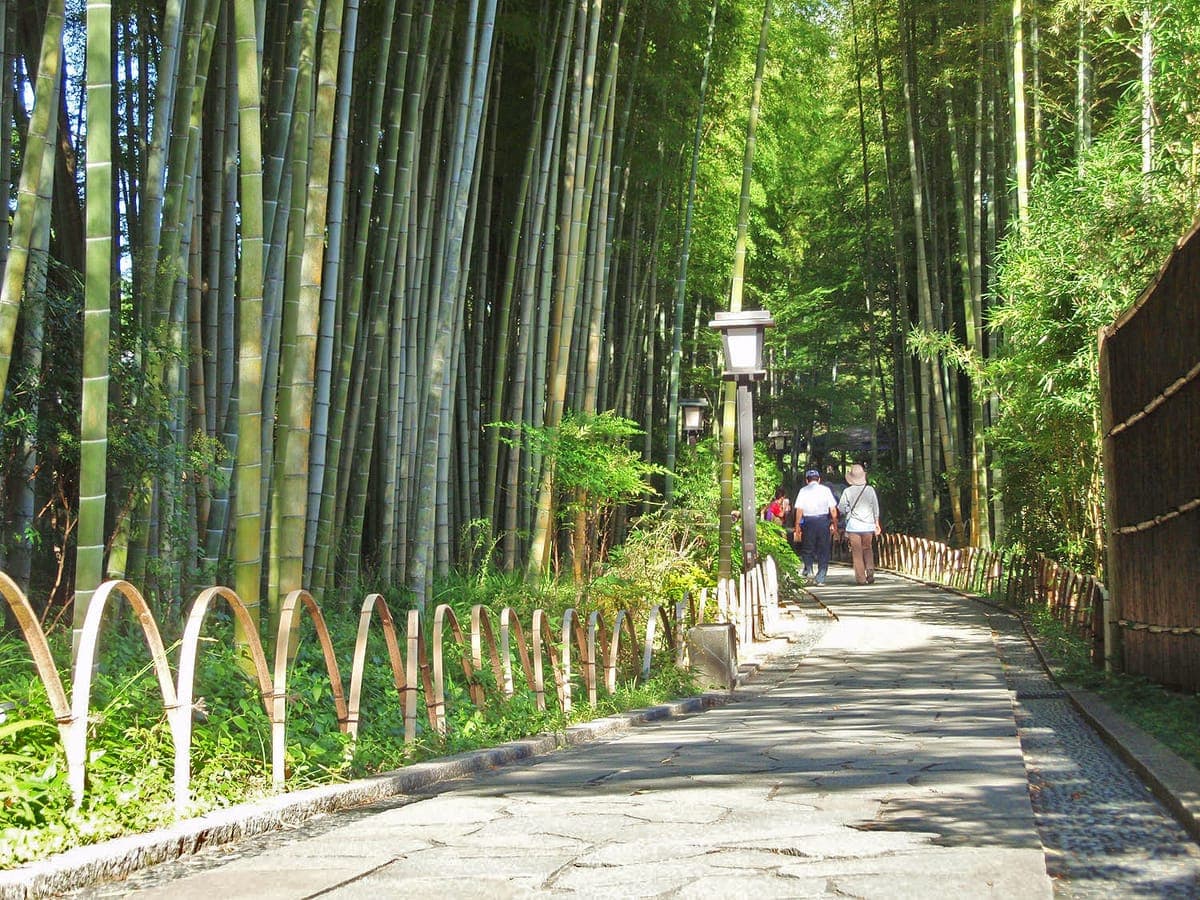
Give the final morning to Shuzenji's own two treasures, both within a walk of the ryokan district. A bamboo path runs beside the river through towering stalks — the green light and the creak of the canes do the work, and unlike Japan's famous bamboo groves, this one is not a queue. At the end of it sits Shuzenji Temple, the town's namesake, with quiet gardens and a long spiritual history of its own. It's a fitting last stop: the loop began in the steam of Atami and ends in the same water, inland, with the noise stripped out.
Getting there: Take the train to Shuzenji Station, then a short bus or walk to the temple; the path and temple are about 33 minutes' walk from the station. Both the bamboo path and the temple precinct are free (the treasure hall charges separately). Best in spring.
Driving the loop vs. rail and bus
Izu is one of the few places near Tokyo where the car genuinely wins. The Izu Kyuko Line runs beautifully down the east coast — Atami, Ito, Shimoda — and if that's all you want, rail is easy and scenic. But the loop's second half is where the peninsula gets good, and the west coast has no railway. Matsuzaki and Dogashima are reached by bus from Shimoda, which works, but locks you to a timetable on a shoreline that deserves stopping whenever you feel like it. Rent a car in Atami or Mishima, drive the circuit, and drop it back where you started.
If you're carless, the honest version is a hybrid: train down the east coast to Shimoda, bus up the west to Matsuzaki and Dogashima, then continue to Shuzenji and take the line north. It's a real trip — just plan around the last bus, which on the west coast comes earlier than you'd like.
How long, and when to go
Three days is the right shape: Atami and the east coast, Shimoda and the cape, then the west coast and Shuzenji. Two is possible if you drive and skip the walking at Jogasaki. Four lets you actually sit still in an onsen, which is the point.
Spring is the peninsula's best season — nearly every stop here peaks in it — with autumn the close second for the Dogashima cruise and the Shuzenji valley. Summer brings beach crowds to the east coast; winter is quiet, and the baths never stop working. Whenever you go, run the loop clockwise so the west coast falls in the late afternoon and Dogashima's sunset does its job.
Keep exploring
- Onsen Towns You Can Reach Without a Car — if you're doing Izu by rail, this is the rest of the carless hot-spring map.
- Kanto Day Trips Without the Crowds — Atami is the gateway; these are the other quiet escapes from Tokyo.
- Hidden Winter Onsen — Shuzenji in the cold, and the snow-country baths beyond it.
- Japan by Local Train — the Izu Kyuko Line belongs to a whole country of slow, scenic rail.
Ready to plan? Build your own hidden-Japan itinerary → — our trip generator turns any of these spots into a day-by-day route.