Hokkaido7 min read
Hidden Hokkaido in Winter: Drift Ice, Cranes & Ice Villages
Hidden Hokkaido in winter — drift-ice coasts, an icebreaker out of Monbetsu, red-crowned cranes, mushroom ice and a hot spring built on a frozen lake.
Best time: December–March
Winter in Hokkaido means Niseko powder and the Sapporo Snow Festival to most visitors — and then the map goes blank. It shouldn't. Between late January and March the Sea of Okhotsk fills with drift ice that grinds against the island's northeastern shore, red-crowned cranes dance in the snowfields inland, and frozen lakes in the Tokachi mountains sprout ice villages and strange mushroom-shaped ice formations. This is Hokkaido winter off the beaten path: an eastward arc from the icebreaker port of Monbetsu, along the Okhotsk coast through Abashiri, out to both sides of the Shiretoko Peninsula, then inland to the crane country of Kushiro and the high caldera lakes above Obihiro. Ten places, all of them at their best when the temperature drops. Below is what each one is, why it stays quiet, and how to reach it in the cold months — with admission listed only where it is published.
01Hokkaidohidden gem
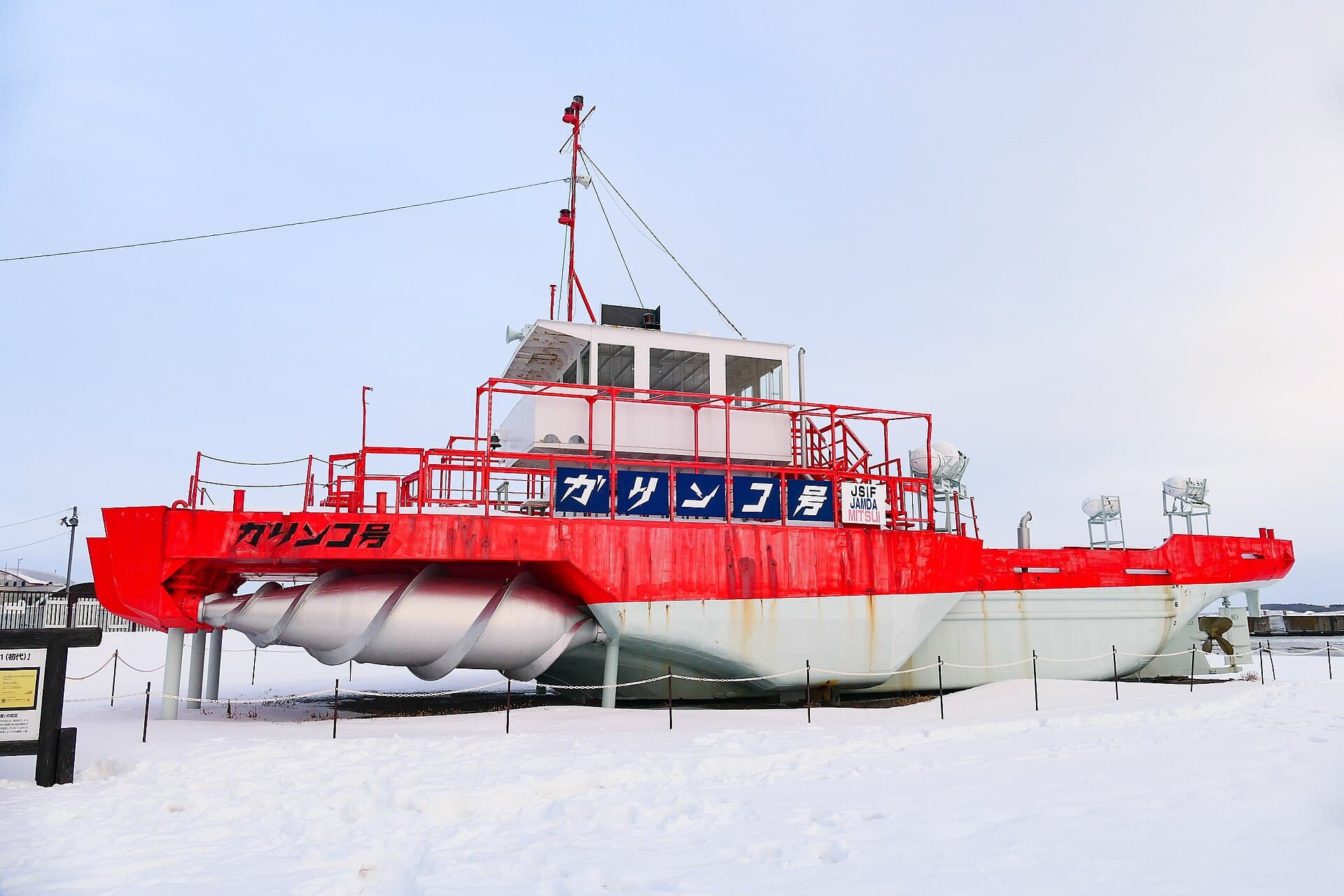
Monbetsu Icebreaker Garinko
紋別流氷砕氷船ガリンコ号
The Garinko sails straight out into the drift ice of the Sea of Okhotsk, crunching a channel through the pack while passengers watch the ice formations shift and break and scan for the wildlife that lives among them. Abashiri's icebreaker gets the guidebook ink; Monbetsu, further up the coast, is passed over in favour of Hokkaido's more famous names — which means a quieter deck, and a genuinely raw encounter with the southernmost sea ice on Earth. Getting there: Monbetsu City is about four hours from Sapporo by train (roughly 3h 52m by car), with the boarding point around a 30-minute drive from town. Operating hours run 8:30 AM–5:30 PM. Adult winter drift-ice cruise boarding fare ¥4,000; ¥3,600 if booked on the web.
02Hokkaido
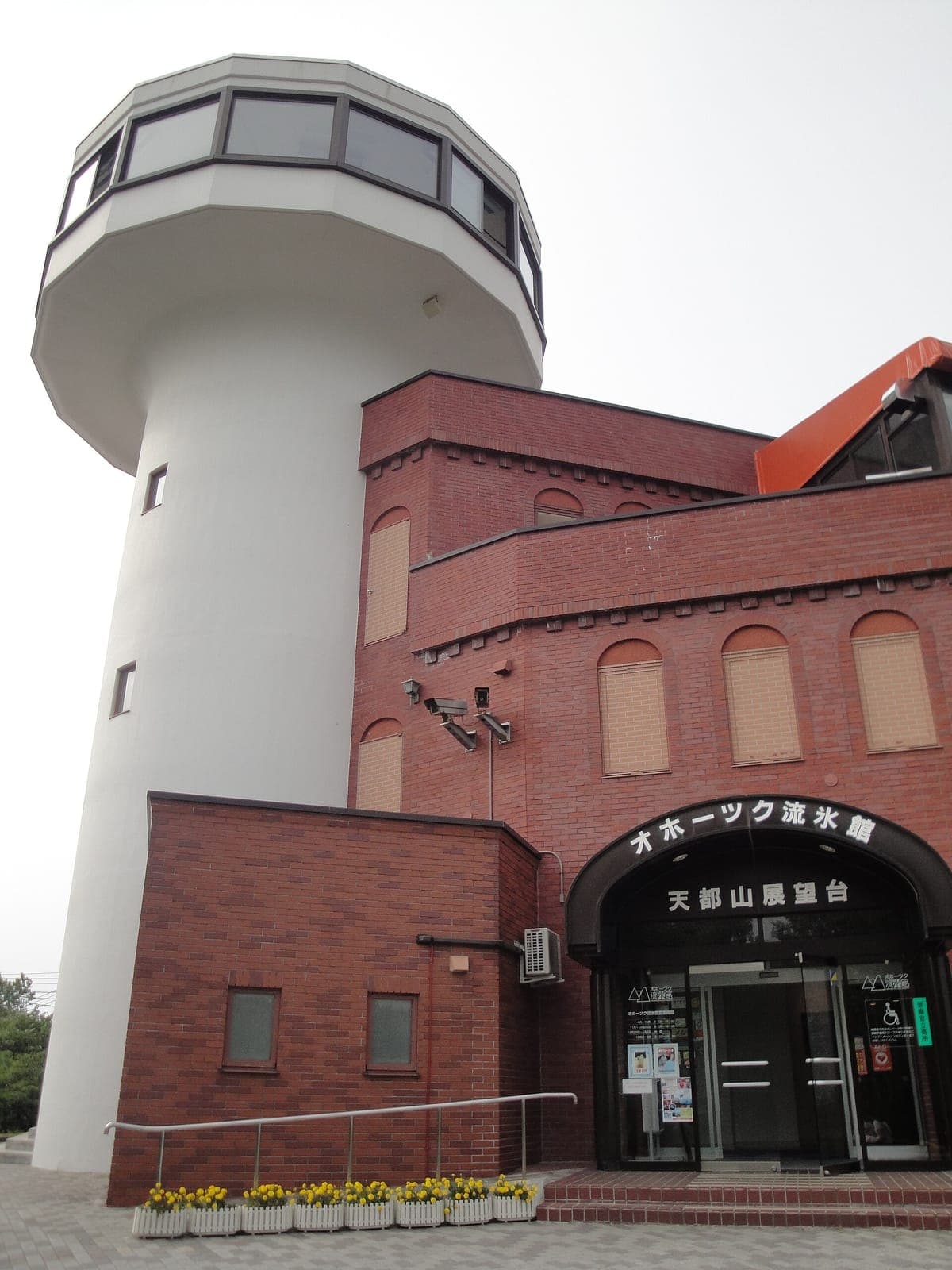
Abashiri Drift Ice Museum
網走流氷館
Before you stand on the ice, it helps to understand it. This Abashiri museum is built around the drift ice of the Okhotsk — how it forms, why it matters ecologically, and what lives in and under it — with interactive exhibits, ice sculptures and a simulated icebreaker experience. Travellers chasing Hokkaido's headline sights skip it, which is a shame: it turns a photogenic phenomenon into something you actually comprehend, and it makes a useful indoor hour when a blizzard closes the coast road. Getting there: From Abashiri Station, a local bus or taxi takes about 15 minutes (Abashiri Station is also about 69 minutes on foot; roughly 4h 47m by car from Sapporo Station). Open 8:30 AM–6:00 PM daily. Adult admission ¥990.
03Hokkaido
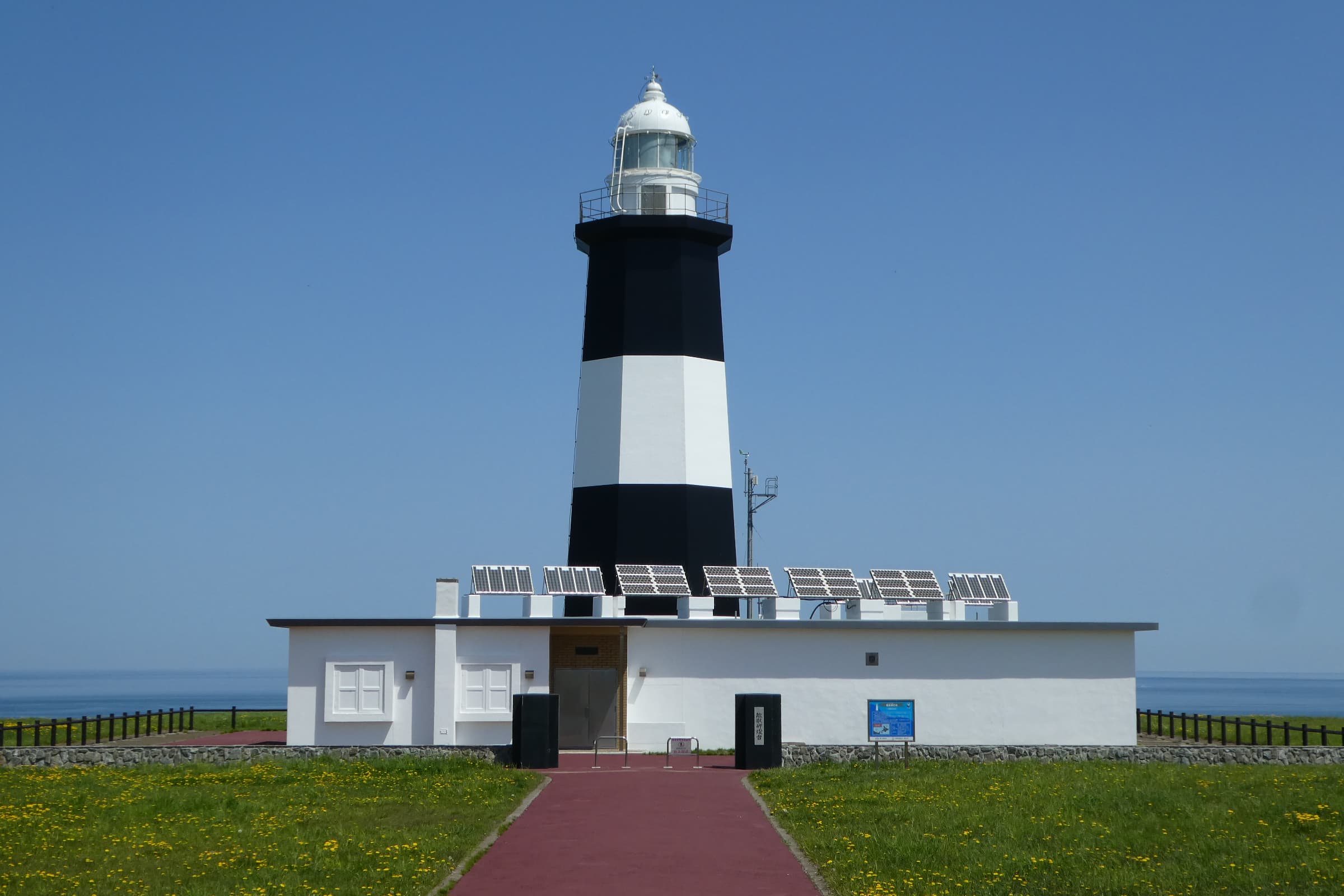
Cape Notoro
能取岬
North of Abashiri, this wind-scoured grassy cape runs out to a black-and-white striped lighthouse dating from 1917, and is often named among Hokkaido's most beautiful capes. The view sweeps across the Okhotsk Sea, and in winter it looks out over the drift ice itself. It is well known to Hokkaido road-trippers but sits outside central Abashiri with no public transit, so visitors who stick to the station area and the drift-ice museum never see it. Getting there: About 20 minutes by car from Abashiri Station. There is no regular bus service — rental car or taxi only. Open 24 hours, free to visit.
04Hokkaidohidden gem
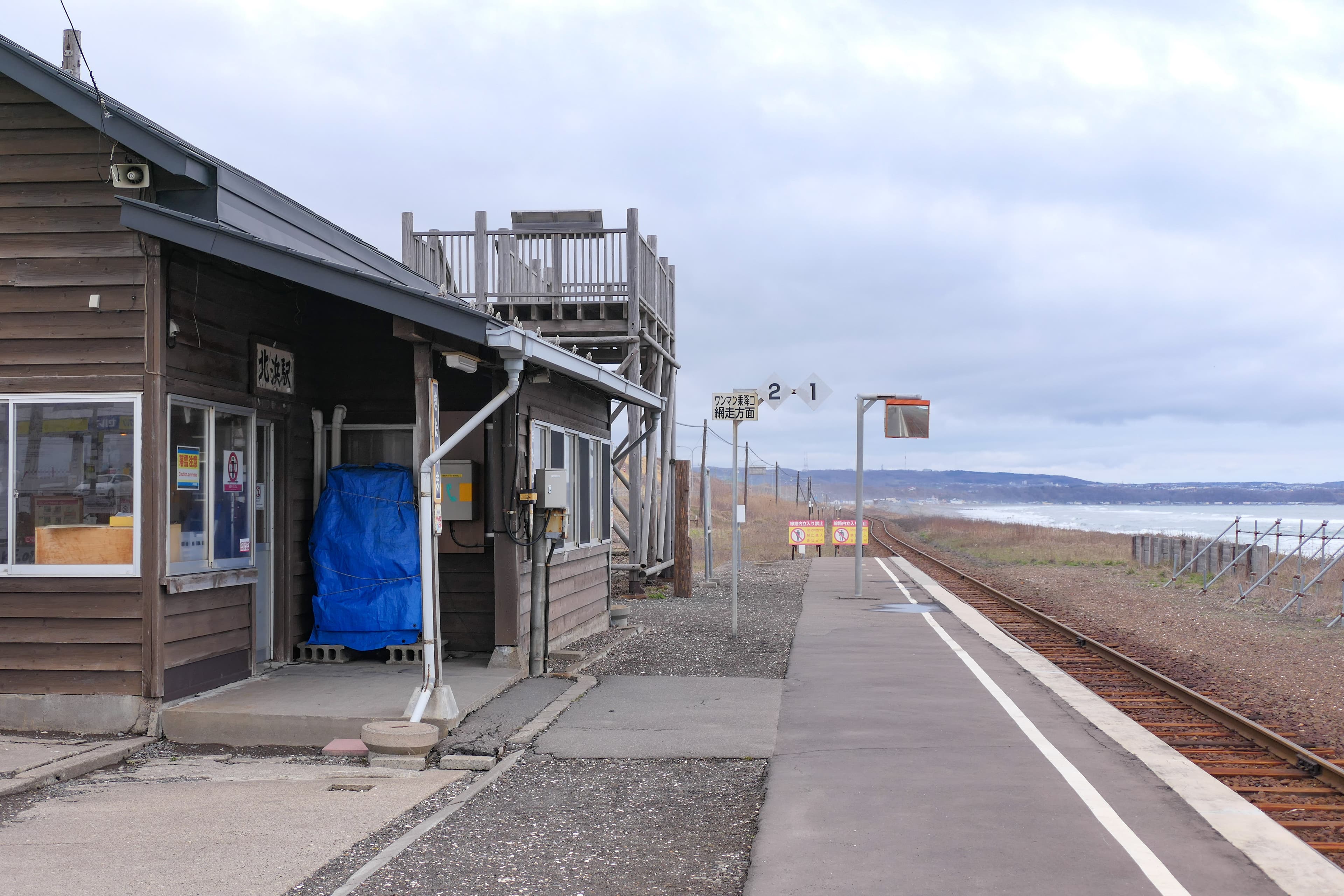
Kitahama Station
北浜駅
A tiny unstaffed halt on the JR Senmō Main Line, Kitahama is the railway station closest to the Sea of Okhotsk in all of Japan: the platform sits roughly 20 metres from the shoreline, with an observation deck upstairs in a converted waiting room. In deep winter that means stepping off a two-car local train directly onto a coast packed with drift ice. It rewards the traveller who rides the scenic Senmō Line rather than driving between Abashiri's headline sights — it is a working train stop, not a built attraction. Getting there: About 25 minutes from Abashiri Station on the JR Senmō Main Line; the station itself is the destination. Open 24 hours, free.
05Hokkaidohidden gem
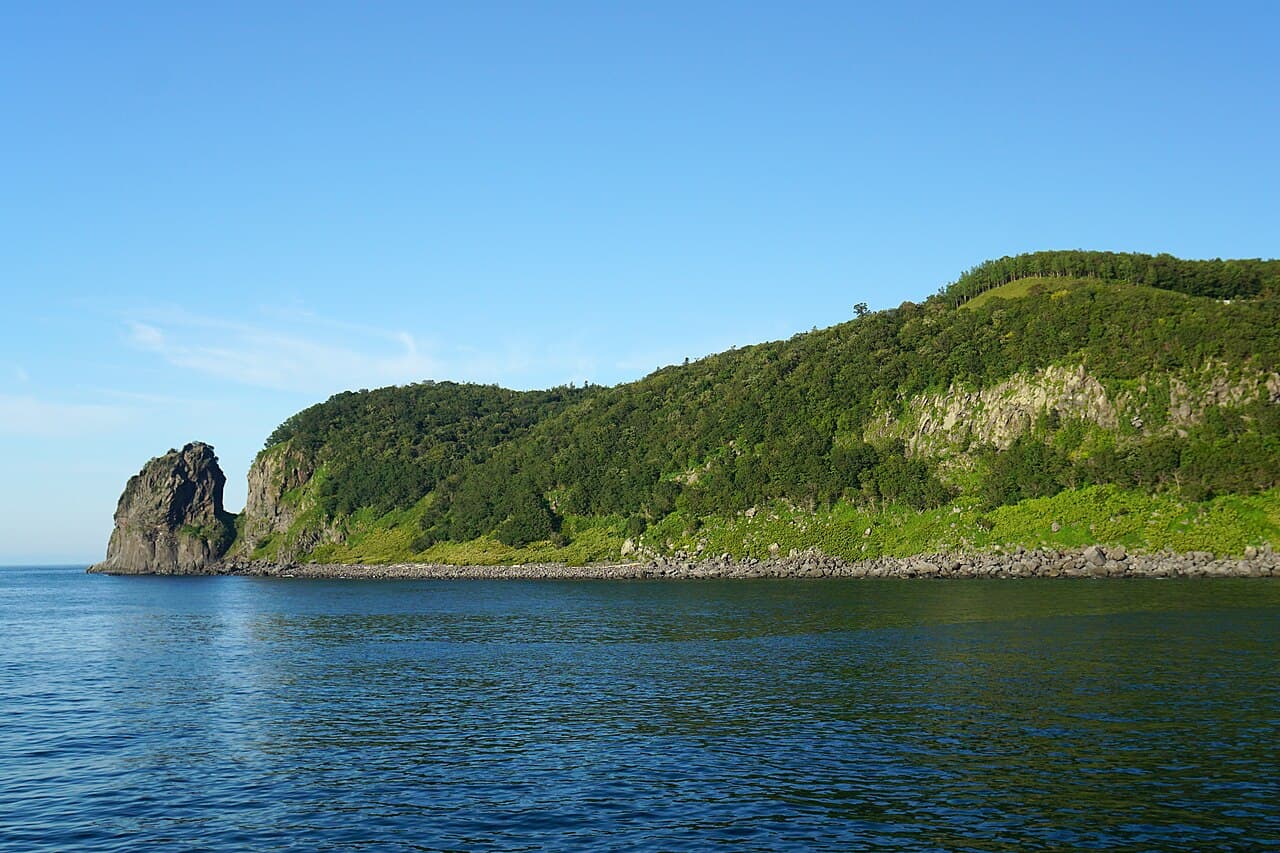
Puyuni Cape
プユニ岬
On the Shiretoko Peninsula, this cliff-top pull-out on Route 334 just above Utoro is counted among Shiretoko's "eight views," and it is the peninsula's finest sunset spot over the Sea of Okhotsk. It is also, in mid-winter, the first place the drift ice reaches the coast — arriving ice, lit by an Okhotsk sunset, with almost nobody there. Most visitors drive straight past on their way to the Nature Center and miss the best free viewpoint on the Utoro side entirely. Getting there: About 5 minutes by car east of Utoro on National Route 334; there is a small free pull-off near the Miharashi bridge. A 24-hour roadside viewpoint, free, no admission.
06Hokkaido
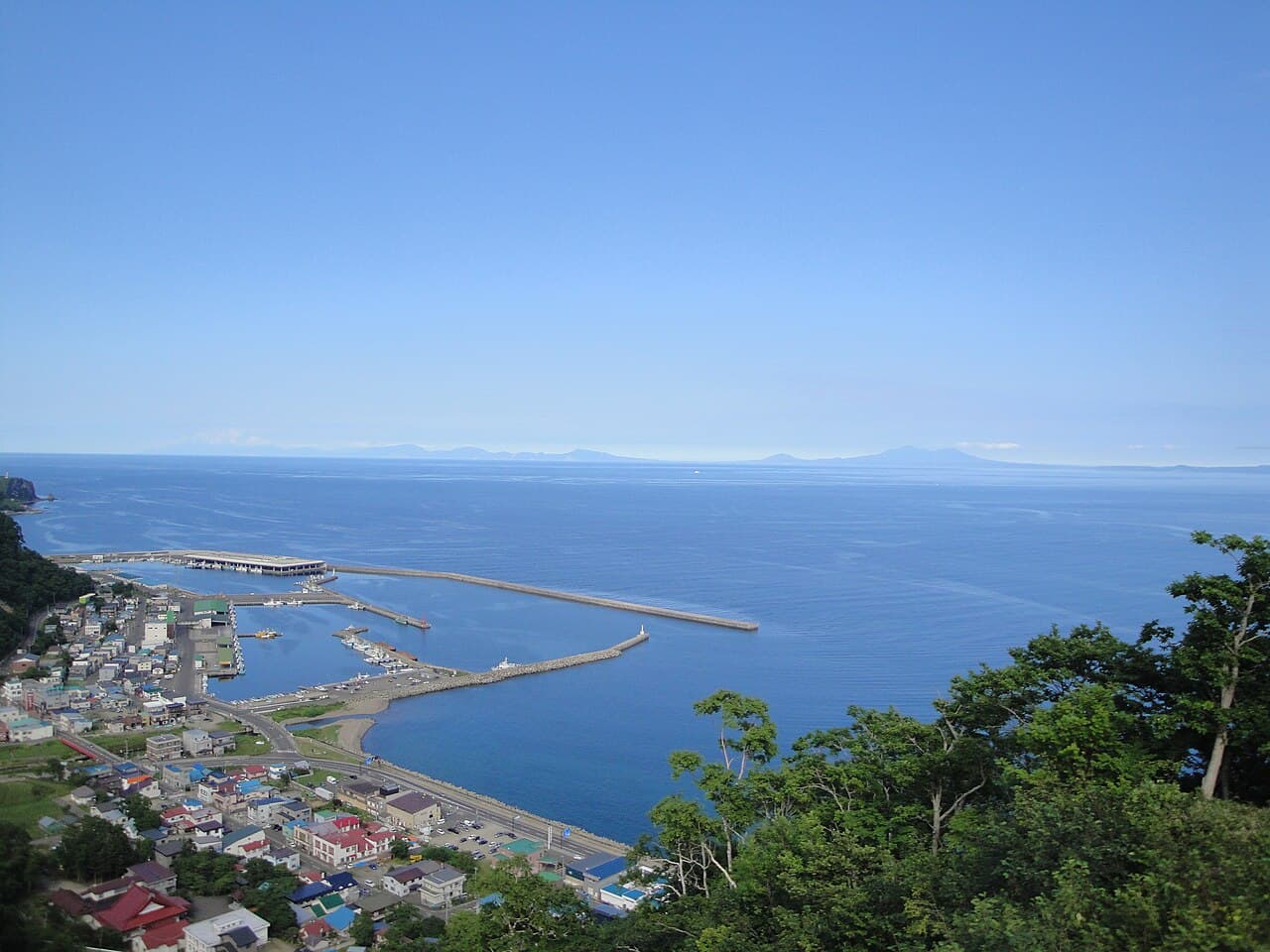
Rausu-Kunashiri Observatory
羅臼国後展望塔
Cross to Shiretoko's wild eastern side and the crowds vanish. This hill-top observation tower above the fishing town of Rausu looks across the Nemuro Strait to Russian-administered Kunashiri Island and, in winter, to the drift ice arriving in the strait; small exhibits inside cover the Northern Territories. The Rausu side sees a fraction of Utoro's traffic, and a viewpoint over a disputed island is a quietly extraordinary thing to stand on. Getting there: About 5 minutes by car up the hill from central Rausu, off National Route 335. The building keeps roughly 9:00–17:00 hours and is seasonal — it is often closed in deep winter — but the outdoor viewpoint is always open. Admission is free.
Whooper Swan Viewing
Inland at Lake Kussharo, whooper swans gather through the migration season, drifting on water kept open by geothermal heat while the mountains around the caldera stand deep in snow. It is one of the great winter wildlife scenes in eastern Hokkaido and one of the least contested: travellers pointed at the region's better-known lakes and onsen leave this stretch of shoreline almost to itself. Getting there: By car or bus from the Kussharo Onsen area, with designated viewing spots along the lake; roughly 2h 53m by car from Sapporo Station. Viewing facilities keep 9:00 AM–5:00 PM hours.
Tsurui Red-Crowned Crane Reserve
The red-crowned crane — endangered, two metres of wingspan, and central to Japanese art for centuries — winters in the snowfields around Tsurui, and this reserve exists to protect it. Observation points and walking trails let you watch the birds feed, call and perform their courtship dances against the snow. It is the quietest possible kind of spectacle, and it sits far enough from Hokkaido's popular circuits that most visitors never make the trip. Getting there: Best reached by car — the reserve is near the town of Tsurui, and public transport options are limited (about 3h 56m by car from Sapporo Station). Open 9:00 AM–4:00 PM, but closed Tuesdays and Wednesdays — check the day before you drive.
07Hokkaidohidden gem
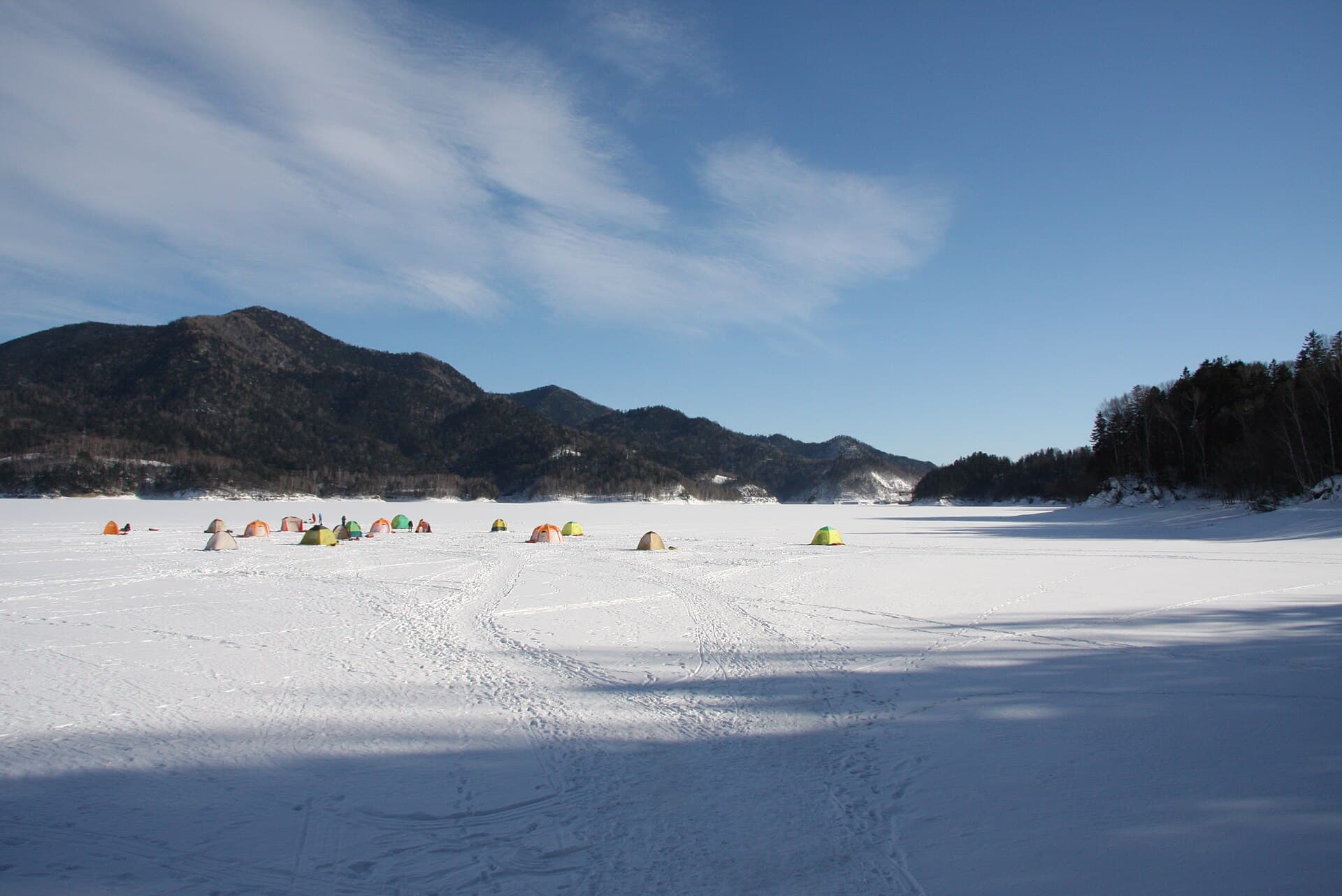
Lake Nukabira
糠平湖
A reservoir in the Taisetsuzan foothills near Kamishihoro, formed by damming the Otofuke River, Nukabira does something in January and February that few lakes anywhere do: the stumps of submerged trees push up through the ice, each crowned with a cap of "mushroom ice." The frozen surface also hosts smelt (wakasagi) ice-fishing. It is a remote Tokachi mountain lake, bypassed by itineraries heading north to Daisetsuzan and Sounkyo. Getting there: No rail access — drive from Obihiro or Kamishihoro along Route 273 (Obihiro is roughly 1.5 hours away by car or bus). Guided ice-fishing and mushroom-ice tours depart from the Nukabira Genryūkyō Onsen village. Free to visit the shoreline and viewpoints.
08Hokkaidohidden gem
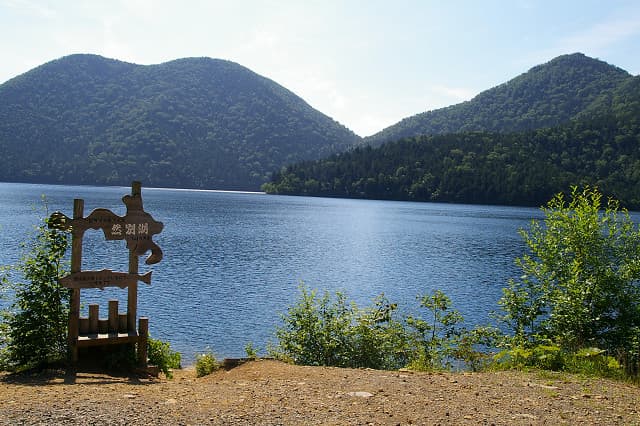
Lake Shikaribetsu
然別湖
Hokkaido's highest lake at 810 m is a volcanic caldera ringed by lava domes in Shikaoi town, just south of Daisetsuzan National Park — and from late January to late March its frozen surface hosts "Kotan," a village of hand-built ice igloos with an open-air hot spring set directly on the ice. Sitting in a mountain pocket well off the Furano–Biei–Tokachi circuit, it is skipped by most itineraries despite being one of the island's most dramatic caldera lakes. Bathing on a frozen lake is the single most memorable thing on this list; see Hidden Winter Onsen for more soaks in the same spirit. Getting there: About a 90-minute drive from Obihiro or Furano. There is no train access — the nearest stations are Shintoku or Obihiro (60–90 minutes by road) — and public transit is limited, mainly winter tour buses to Kotan. The lake itself is free; Kotan's facilities and its onsen may charge separately.
Getting around, and when to go
Drift ice is the clock everything else runs on. It typically reaches the Okhotsk coast in the depths of winter — Puyuni Cape is where it first touches land — and the icebreaker season, the ice village and the mushroom ice all belong to the same late-January-to-March window. Lake Shikaribetsu's Kotan runs late January to late March; Nukabira's mushroom ice is a January–February phenomenon.
A rental car is close to essential. Cape Notoro, Puyuni Cape, Rausu, Tsurui and both lakes have thin, seasonal or non-existent bus service, and driving is what turns ten scattered places into one route. The exception is beautiful: the JR Senmō Main Line hugs the Okhotsk shoreline into Kitahama, and riding it in winter is an attraction in itself — more of that in Japan by Local Train. Winter roads here are snow-packed and the daylight is short, so plan fewer stops per day than you think you need, and build in slack.
Related guides
- Hokkaido Beyond Sapporo — the same island in its green and gold seasons.
- Hidden Winter Onsen — snow-country hot springs, including Shikaribetsu's bath on the ice.
- Japan in Winter Beyond Skiing — snow, ice and steam across the whole country.
- Tohoku's Winter Festivals — pair the north with snow-lantern nights on the way up.
Ready to plan? Build your own hidden-Japan itinerary → — our trip generator turns any of these spots into a day-by-day route.