Kyushu8 min read
Hidden Beaches of Kyushu: White Sand Nobody Fights You For
The best hidden beaches of Kyushu — Tsushima and Iki's turquoise coves, Gotō's white sand, wild Amakusa, empty Miyazaki and the Ōsumi islands' surf.
Best time: May–September
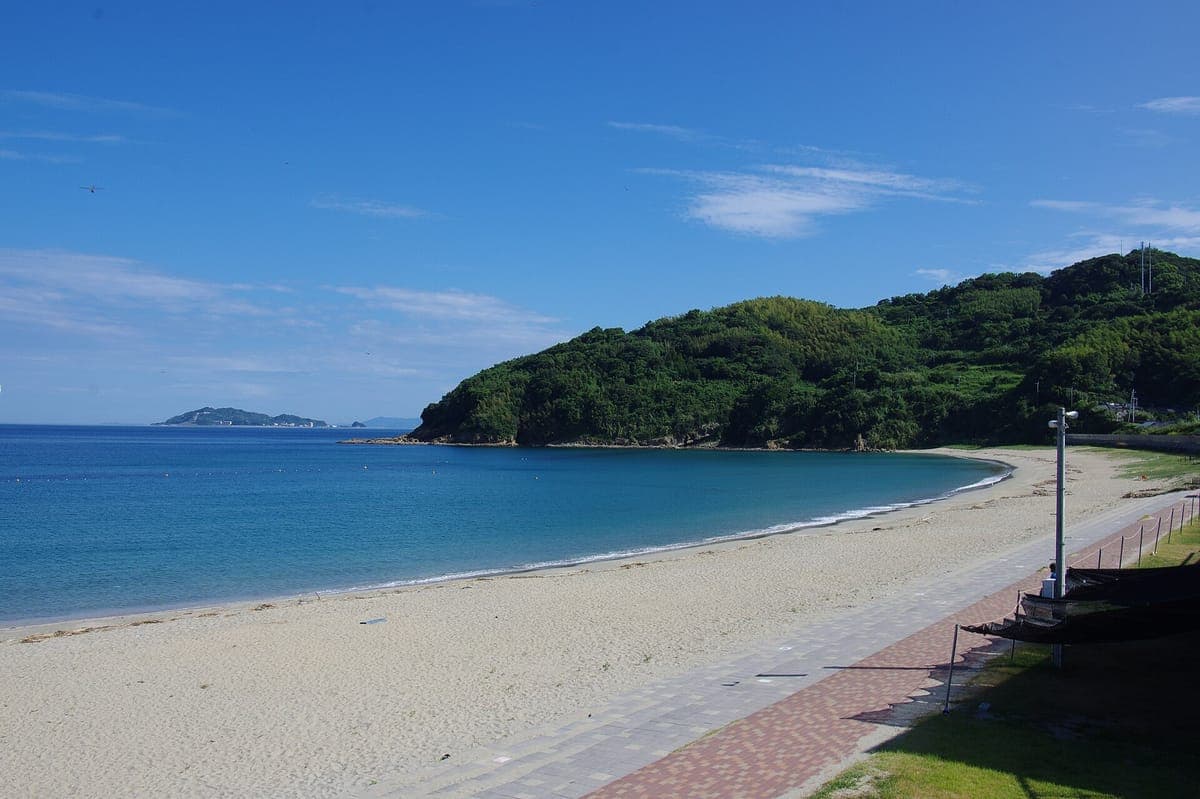
Ask most travellers where Japan keeps its good beaches and they will say Okinawa. They are not wrong — but they are missing an entire island's worth of coastline that sits far closer to the mainland and sees a fraction of the visitors. Kyushu is ringed by water on every side: the wind-scoured Genkai Sea in the north, the East China Sea to the west with its scatter of Nagasaki islands, the Pacific swell breaking along Miyazaki, and the subtropical Ōsumi islands trailing off the southern tip. Between them they hold beaches that make Japan's official "100 best" lists and still, in high summer, leave you room to put your towel down wherever you like. The ten below are all genuine swimming or walking beaches — turquoise coves you reach by boat, crescents of white sand backed by pine, dune coasts that feel elemental in the off-season. We have ordered them as a journey: north from Fukuoka, out to the western islands, down the Amakusa side, across to the Pacific coast, and finally south to the islands where Kyushu quietly turns tropical.
01Fukuokahidden gem
Sanrigahama
岡垣三里松原
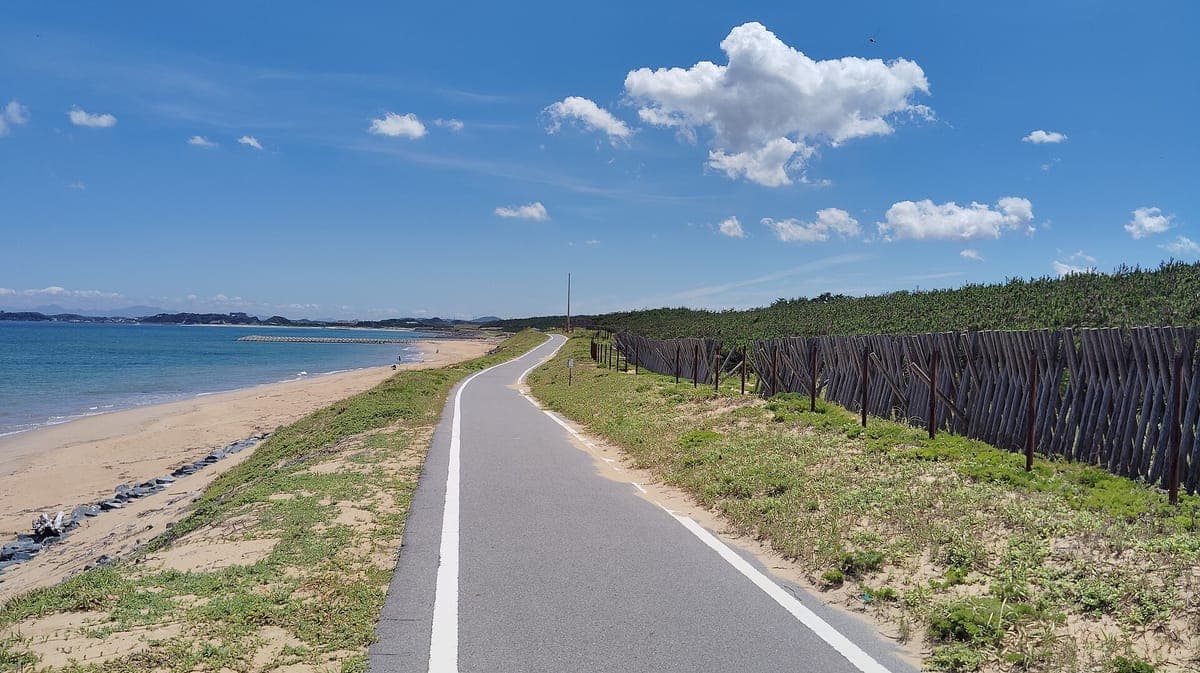
Start where the crowds do not: the Genkai Sea coast north of Fukuoka. This pine-backed shoreline in Okagaki gives you long beach walks, wind, and open sea views, and it feels spacious and local rather than resort-like — a working stretch of coast rather than a manufactured one. Travellers moving between Fukuoka and Kitakyushu rarely think to detour here, which is precisely the appeal: within an hour of a major city you get a horizon with nothing on it. Come for a morning walk under the pines and a swim, then carry on.
Getting there: Ebitsu Station is a 28-minute walk, or take a bus or taxi from Ebitsu Station toward the coast; roughly 58 minutes by car from Hakata Station. Free public beach, no admission. Best in summer.
02Nagasakihidden gem
Miuda Beach
三宇田浜
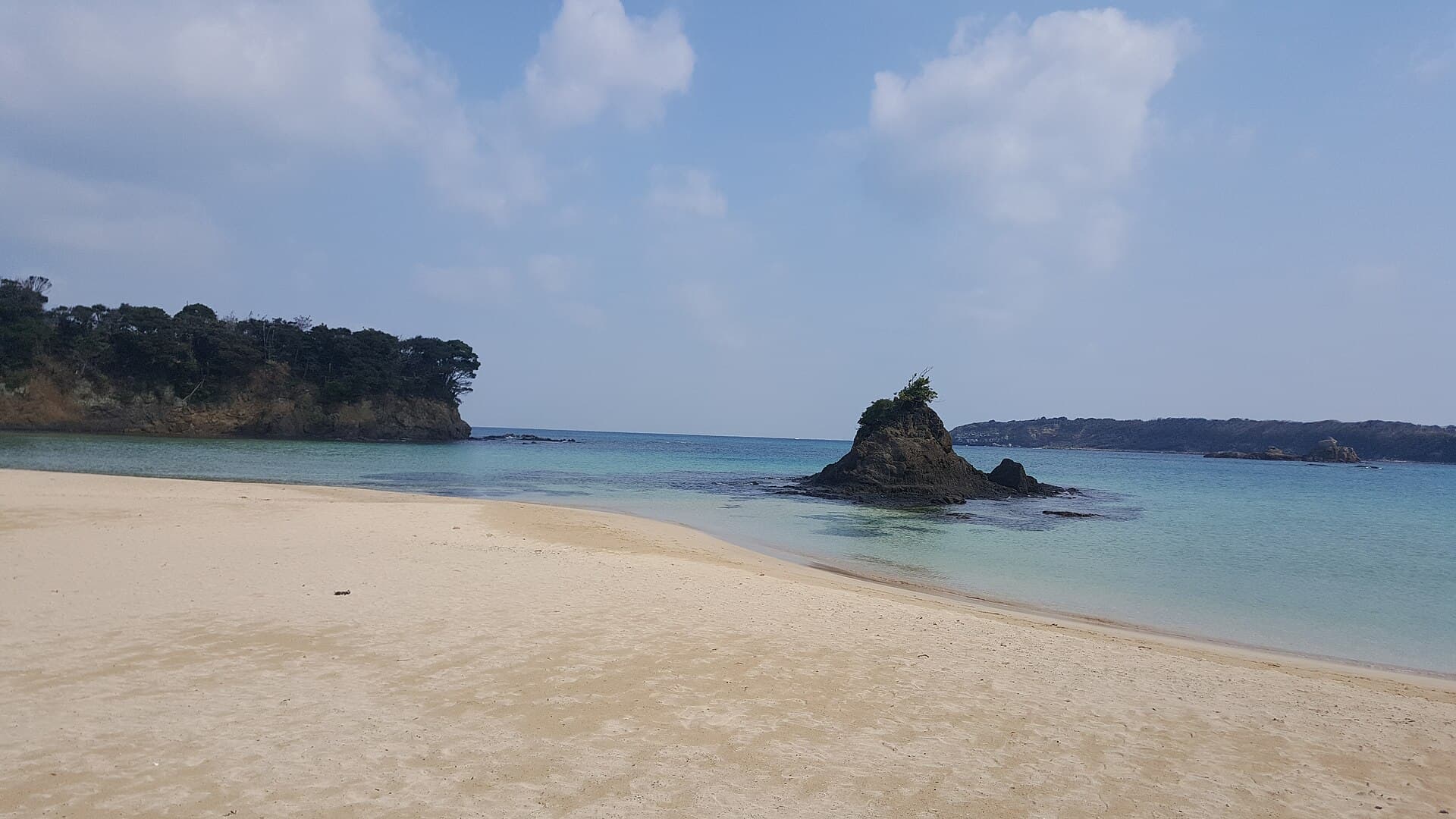
Tsushima sits in the strait between Kyushu and Korea, and its northern tip hides something you would not expect at Japan's far northwestern edge: a crescent of genuinely white sand and turquoise water, near Hitakatsu, good enough to have made Japan's "100 beaches" list. The colour of the water is the shock — Okinawa-grade, at a latitude where you expect grey. Because reaching Tsushima at all takes intent, the beach is rarely crowded even at the height of the swimming season.
Getting there: Hitakatsu Port, then car — Tsushima's northern port is the closest arrival point. Free public beach with no admission, though seasonal parking may charge. Best in summer.
03Nagasakihidden gem
Tsutsukihama Beach
筒城浜
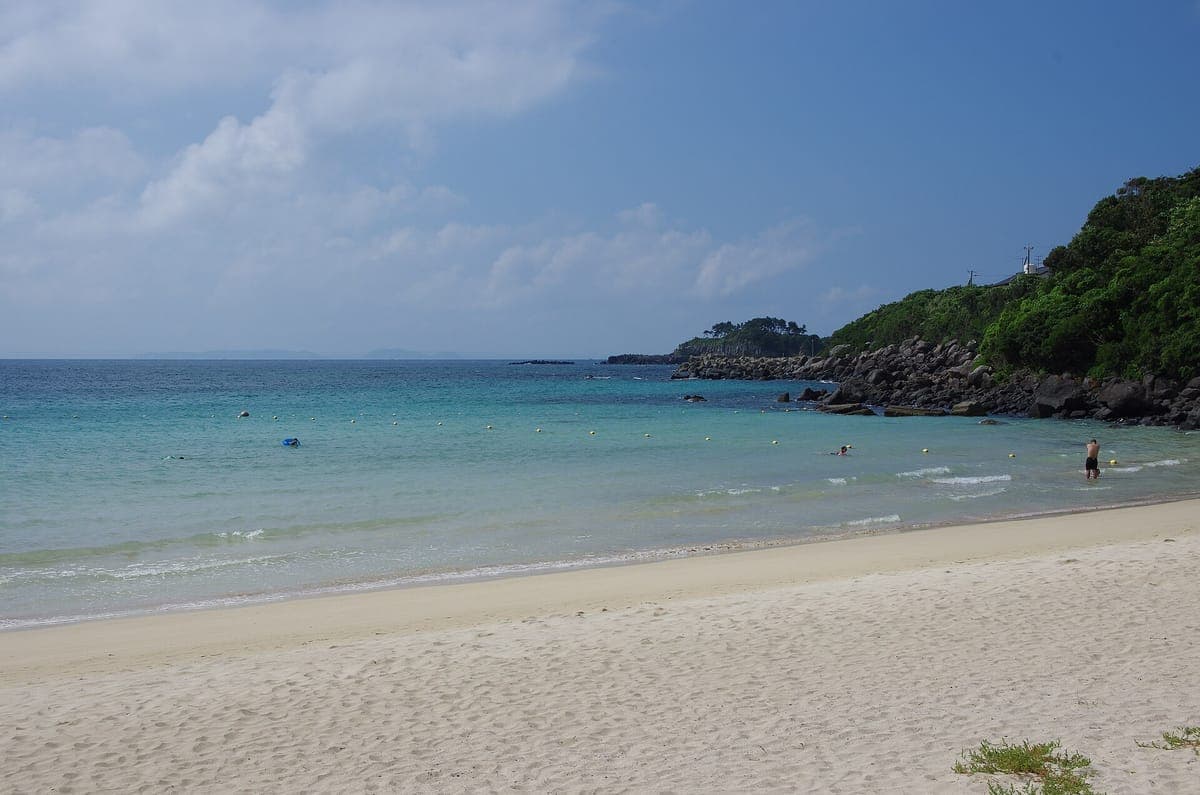
Iki, the smaller and gentler of the two Genkai islands, keeps its best beach on the east coast: a long arc of fine white sand running into clear shallow water, and another entry on Japan's designated list of 100 beaches. What sets it apart from the mainland resort strips is simply how quiet it stays — the same sand, the same sea, and a fraction of the people. It is a beach to spend an entire slow day on rather than tick off.
Getting there: Ashibe Port, then car. Free to enter, though parking and facility fees may apply during the summer season. Best in summer.
04Nagasakihidden gem
Tatsunoshima Island
辰の島
Iki's other trick is an uninhabited islet just off its northern coast, ringed by white sea-cliffs with a brilliant turquoise swimming cove tucked inside them. In summer a short cruise boat runs out from Katsumoto, and the crossing does most of the work: you step off onto a castaway-blue beach that belongs to an already off-grid island. Snorkelling here has the particular pleasure of knowing that when the boat leaves, almost nobody is coming.
Getting there: From Iki's Katsumoto port by cruise boat. Boats operate roughly 8:30 AM – 5:00 PM. Best in summer, when the crossing runs.
05Nagasakihidden gem
Takahama Beach
高浜海水浴場
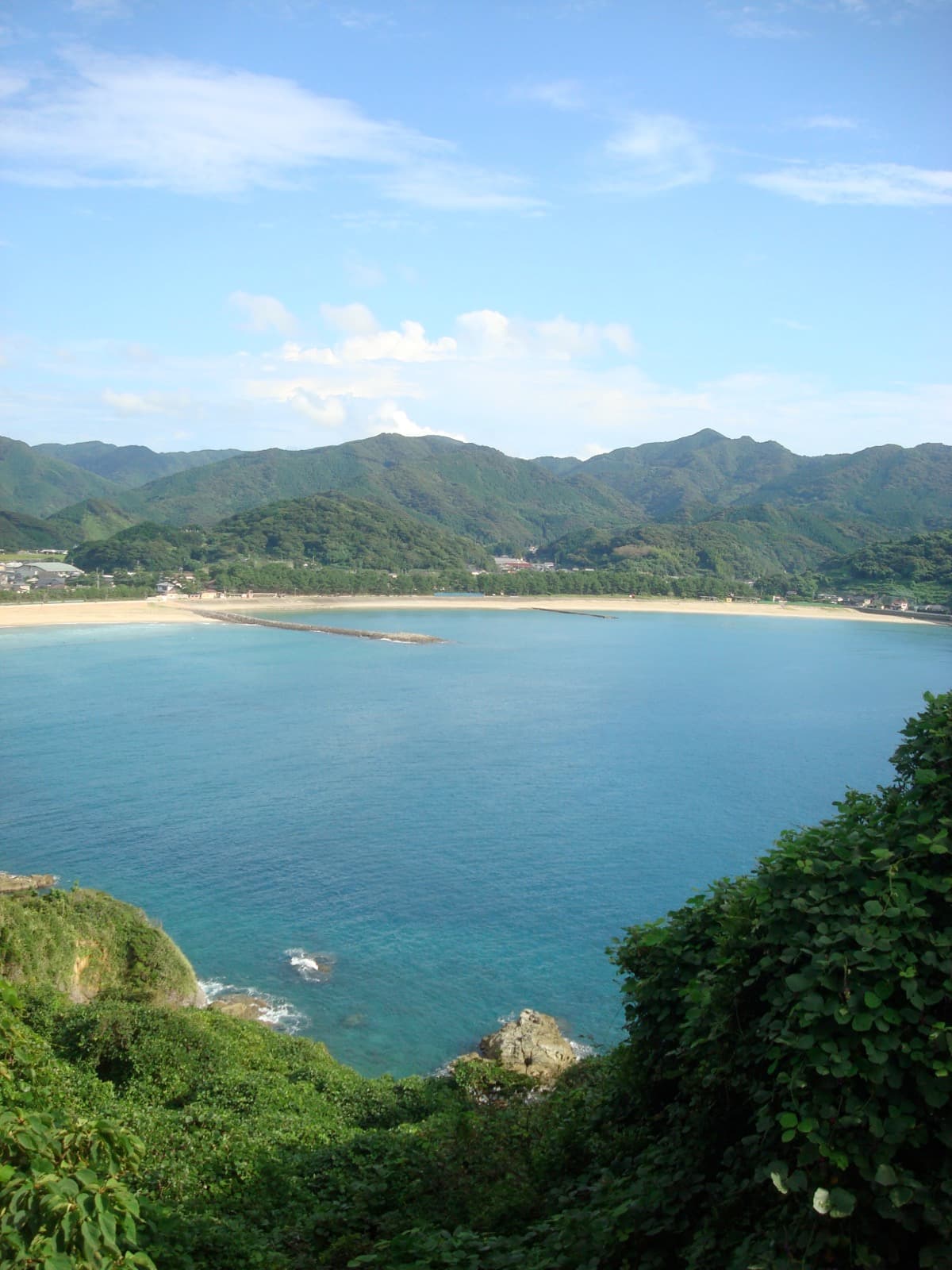
If Kyushu has one beach worth crossing the East China Sea for, this is it. On western Fukue, the largest of the Gotō Islands, Takahama is a bay of luminous turquoise water and pure white sand backed by green headlands — and it is routinely called the most beautiful beach in Japan, a claim that survives arrival. The Gotō archipelago is far enough out that the water clarity has nothing to fight, and the headlands frame the bay so completely that photographs of it look staged. Pair it with the islands' hidden-Christian heritage and you have a trip in itself.
Getting there: Fukue Port, then car. A seasonal beach-use fee applies during the swimming season: ¥500 adults, ¥300 children, with showers and lockers charged separately. Best in summer.
06Kumamotohidden gem
Hakuzuruhama Beach
白鶴浜海水浴場
Back on the Kyushu side, Amakusa's west coast holds a 1.3-kilometre crescent of white sand and clear turquoise water near Takahama village, rated among Japan's finest beaches. It does all three things well: calm swimming, surf breaks when the swell is up, and a sunset that drops straight into the East China Sea. It rarely appears on first-time Amakusa itineraries, which tend to run south toward the Christian heritage sites instead — so the best beach on the island is also its quietest headline sight.
Getting there: Amakusa has no railway; the nearest hub is Hondo Bus Center. Roughly 2h20m by car from Kumamoto Station, or about 50 minutes from Amakusa Airport. Free public beach, with seasonal showers and changing rooms during the summer swimming season.
07Miyazaki
Ishinami Beach
石波海岸
Cross to the Pacific side and Miyazaki keeps its best-kept sand in Kushima, well south of the busy Nichinan tourist strip. Ishinami is a roughly one-kilometre arc of unspoiled white sand backed by subtropical coastal forest, designated a national natural monument and listed among Japan's 100 Best Beaches — and loggerhead turtles still come ashore here to nest. There is no train station and only a few local buses a day, which is exactly why it stays nearly empty even in August. Undeveloped, in the best sense.
Getting there: By car, about 15–20 minutes south of Nango on Route 448 toward Cape Toi; Nango Station (JR Nichinan Line) is the nearest rail point. A Miyazaki Kōtsū bus stop called "Ishinami" also serves the beach, roughly 50 minutes from Kushima Station. Free, undeveloped beach.
08Kagoshimahidden gem
Fukiagehama
吹上浜
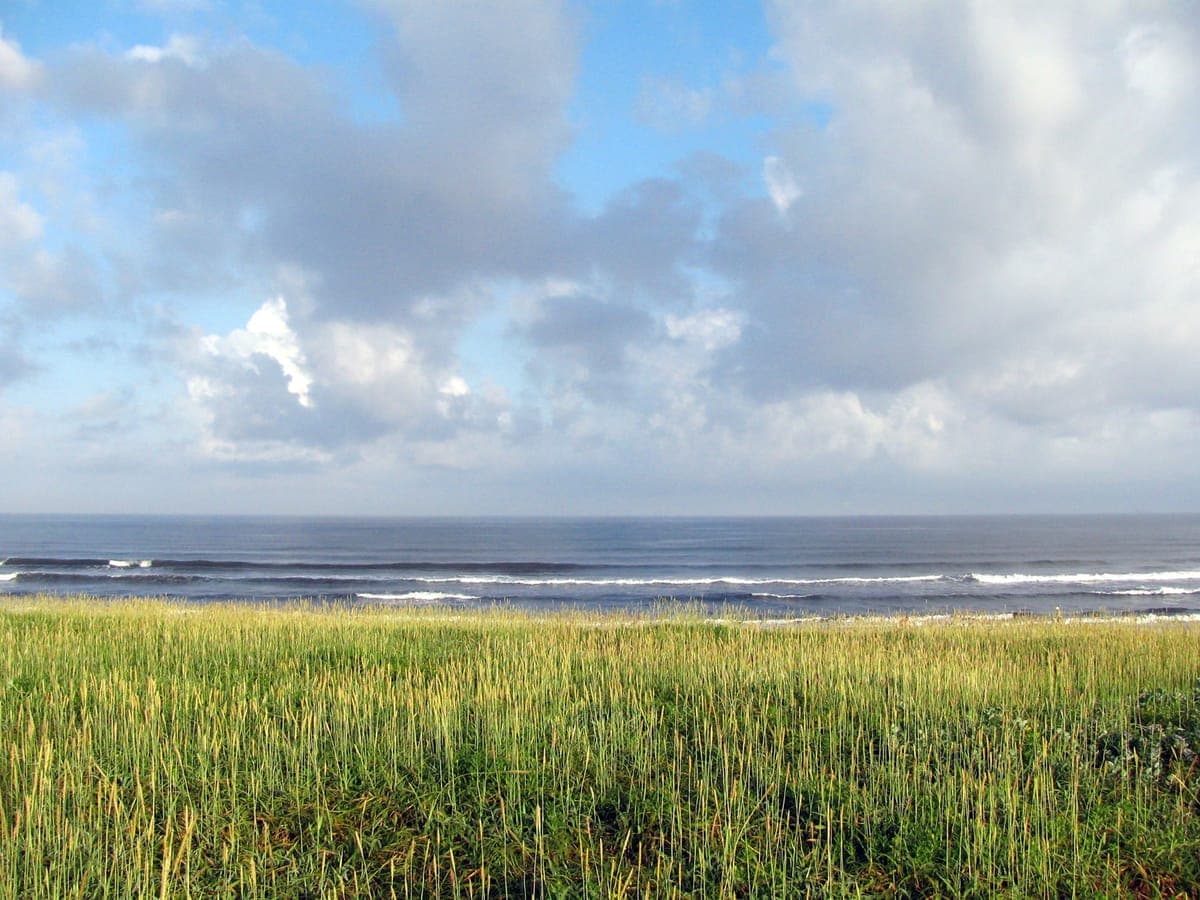
Not every great beach is a swimming beach. On Kagoshima's Satsuma coast, Fukiagehama is a long, windswept sand coast of dunes, pine forest and wide East China Sea views — vast in a way Japanese beaches rarely are, and outside the summer events it feels genuinely empty and elemental. Its scale is its argument; what it lacks is the branding of the famous names, which is why you can walk it in near solitude. Clamming here is free, and the winter light on the dunes is the reason to come.
Getting there: Drive from Kagoshima City or the Ibusuki area toward Minamisatsuma's coast. Free beach access; only rentals at the seaside park charge separately. Best in winter, when the coast is at its starkest.
09Kagoshimahidden gem
Nakayama Seashore (Tanegashima)
中山海岸
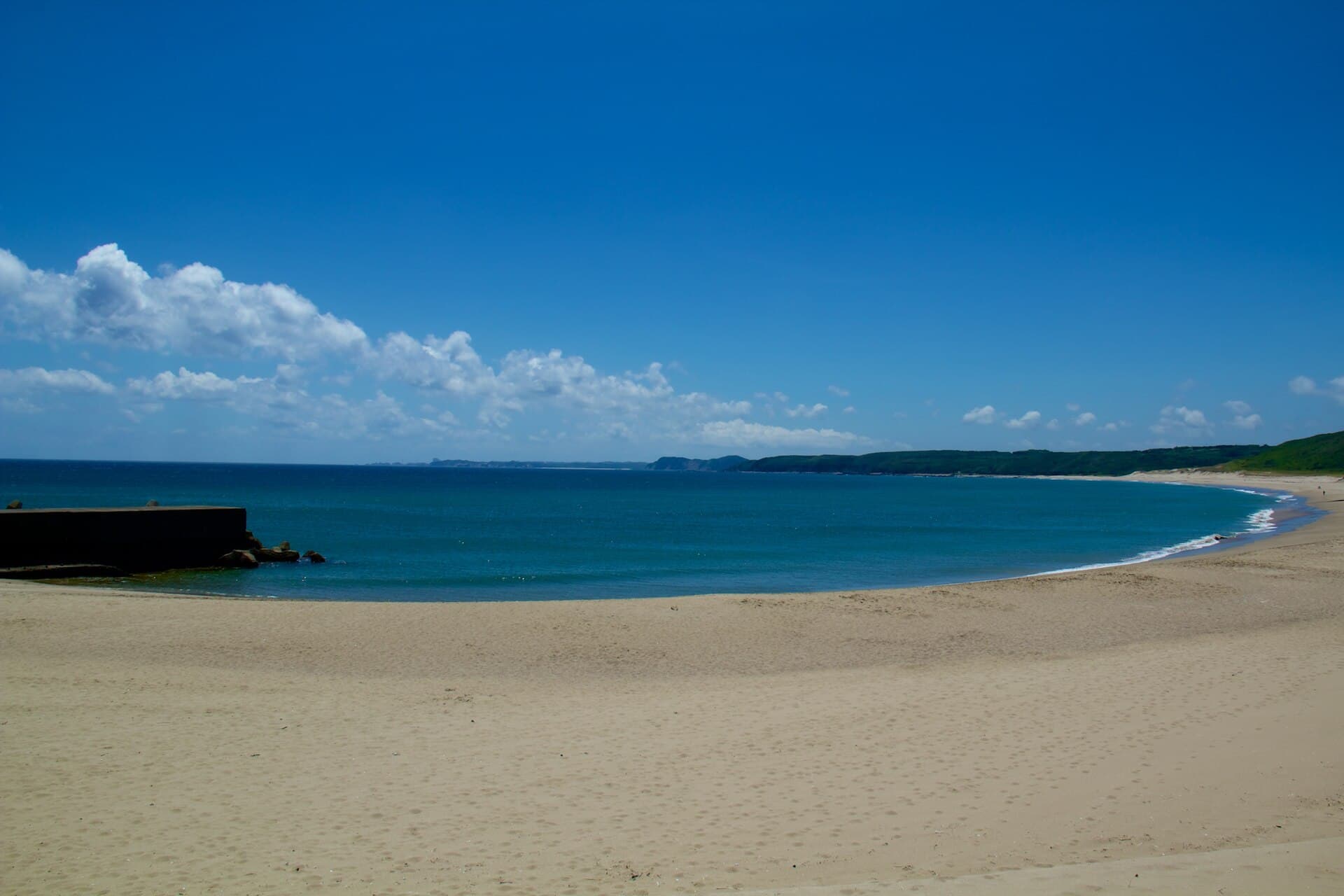
Tanegashima is best known for rockets, which means its coastline goes almost entirely unclaimed. The Nakayama seashore, in Nakatane, is a long, near-deserted crescent of white sand and deep-blue surf — the kind of beach surfers seek out precisely because there is nobody on it. Even in summer you can walk a long way along it and see only the swell. Bring everything you need; the emptiness is the point.
Getting there: Nishinoomote Port, then car — Tanegashima is reached by ferry or jetfoil from Kagoshima. Free open access, no admission. Best in summer.
10Kagoshimahidden gem
Isso Beach
一湊海水浴場
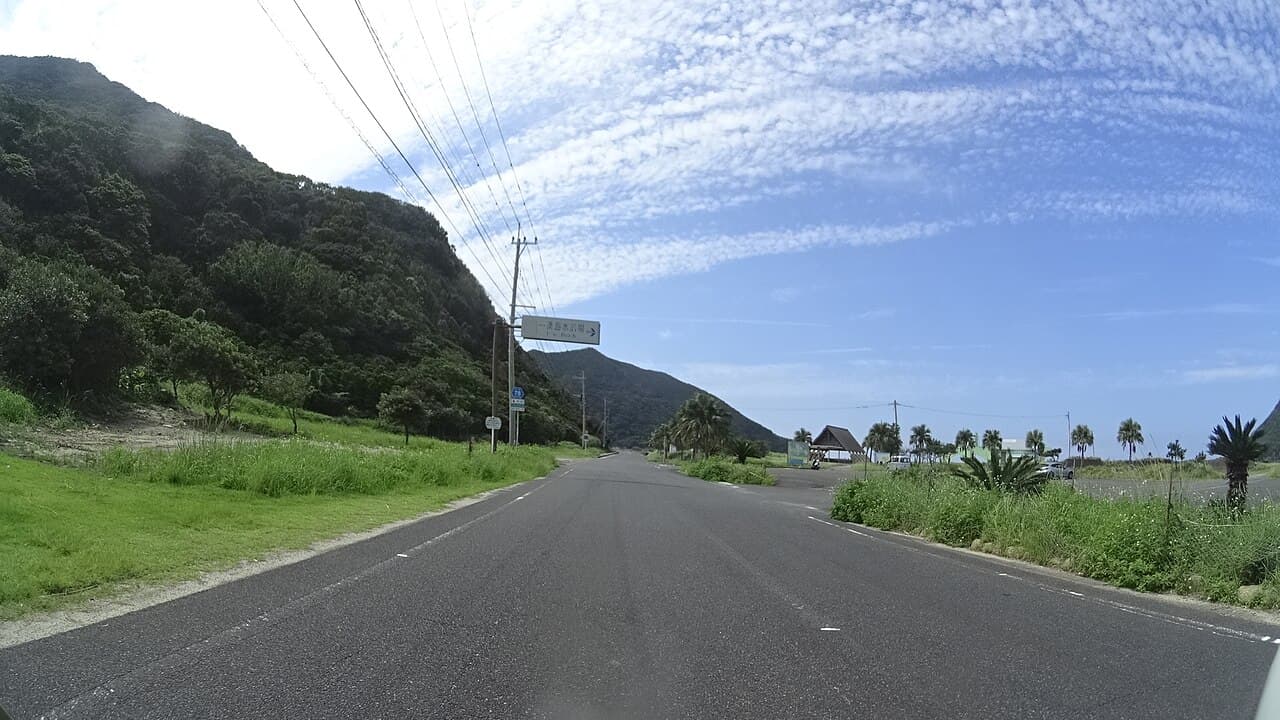
Finish on Yakushima, where nearly every visitor looks inland at the ancient cedar forests and almost nobody looks at the sea. Isso, on the north coast near Miyanoura, is a serene stretch of clear water and sandy shore framed by lush greenery, with the island's mountains rising behind it — a place to swim or walk after a long day in the moss forests. It is the perfect antidote to a hard hike, and the contrast between granite peaks and calm shallows is pure Yakushima.
Getting there: Take a local bus from Yakushima Airport or Miyanoura Port, then walk a short distance to the beach. Free public beach. Best in summer.
When to go, and how to do it
The Kyushu swimming season runs roughly May to September, with July and August the reliable window for warm water, running beach facilities, and the summer-only boats — Tatsunoshima's cruise from Katsumoto is a seasonal service, and the seasonal showers and changing rooms at Hakuzuruhama and Takahama only appear then. Shoulder months are quieter and still perfectly walkable. Two beaches invert the rule: Fukiagehama is at its best in winter, when the dunes empty out entirely, and Tanegashima's surf coast rewards anyone chasing swell rather than sunbathing.
Getting around is the real planning question. Almost none of these beaches has a station at the sand: Amakusa has no railway at all, Ishinami has a handful of buses a day, and every island beach here assumes a rental car or scooter picked up at the port. Chain the western islands together by ferry — Tsushima and Iki from northern Kyushu, Gotō from Nagasaki or Fukue — and treat the Ōsumi islands as a separate southern leg out of Kagoshima. If you are already driving Kyushu, the beaches slot naturally into a loop; our Kyushu by car volcano road trip covers the mainland spine, and the coast is never more than a detour away.
Keep exploring
- Hidden Nagasaki: Islands, Faith & Volcanic Coasts → — the Gotō and Iki story behind those turquoise coves.
- The Deep South: Kagoshima & Miyazaki's Wild Side → — pair Ishinami with Cape Toi's wild horses.
- Japan's Secret Islands → — Gotō, Yakushima and further south.
- Kyushu by Car: The Great Volcano Road Trip → — the driving route that connects it all.
Ready to plan? Build your own hidden-Japan itinerary → — our trip generator turns any of these spots into a day-by-day route.