Okinawa7 min read
Okinawa Beyond the Aquarium: 9 Hidden Corners of the Main Island
Hidden things to do in Okinawa main island: sacred groves, a UNESCO garden, switchback coast roads and easy Kerama day-trips, well beyond the aquarium crowds.
Best time: Year-round (best Apr–Jun, Oct–Nov)
Almost every first trip to Okinawa runs the same loop: the Churaumi Aquarium, one busy resort beach, maybe Shuri Castle, then home. It is a fine loop, but it skips almost everything that makes the island itself feel like a former kingdom rather than a resort. The good news is that the most rewarding hidden things to do in Okinawa main island are close to that same route, and most reward a rental car rather than a tour bus. This guide gathers nine of them, running roughly south to north and finishing with a Kerama day-trip: a UNESCO royal garden emptier than the castle up the hill, a sacred grove at the heart of Ryukyu religion, a switchback coast road named for paradise, and a rooftop where you legally watch fighter jets. None of them require the aquarium queue.
01Okinawa
Shikinaen Royal Garden
識名園
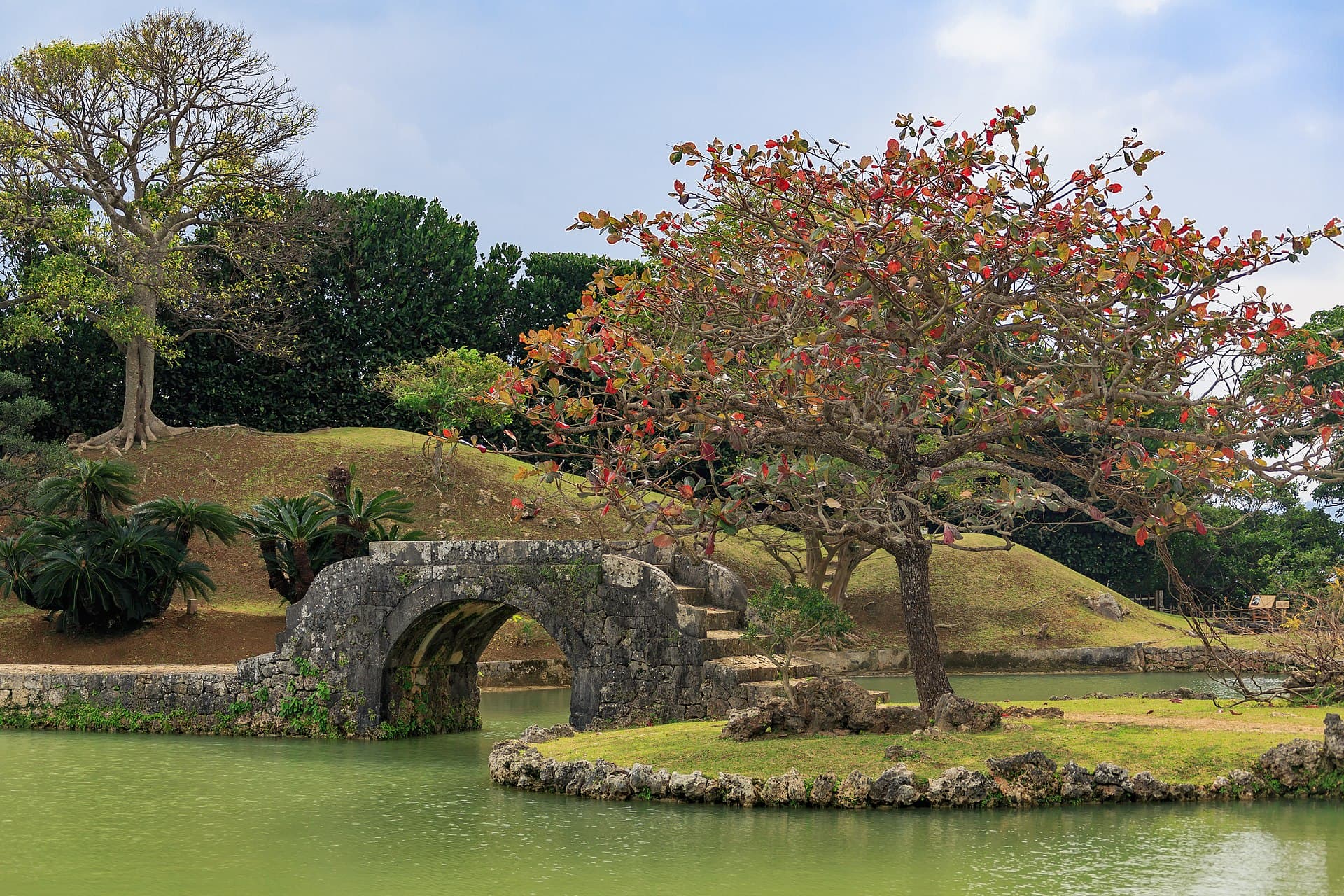
Built in 1799 as a retreat and reception villa for the Sho royal family and their visiting Chinese envoys, Shikinaen is a UNESCO-listed Ryukyu garden that most Shuri Castle visitors never reach. A stroll path circles a pond with two small islands, a red-tiled Chinese-style hexagonal pavilion, and arched stone bridges, with plum and wisteria in season — all painstakingly rebuilt after the garden was destroyed in the Battle of Okinawa. It sits a 20-minute walk south of Shuri and gets a fraction of the crowd, which makes it arguably the more tranquil half of the same World Heritage inscription.
Getting there: About a 25-minute walk or short taxi/bus ride south from Shuri Station on the Yui Rail; limited on-site parking for drivers. Admission ¥400. Closed Wednesdays. Best in spring for the plum and wisteria bloom.
02Okinawa
Himeyuri Peace Museum
ひめゆり平和祈念資料館
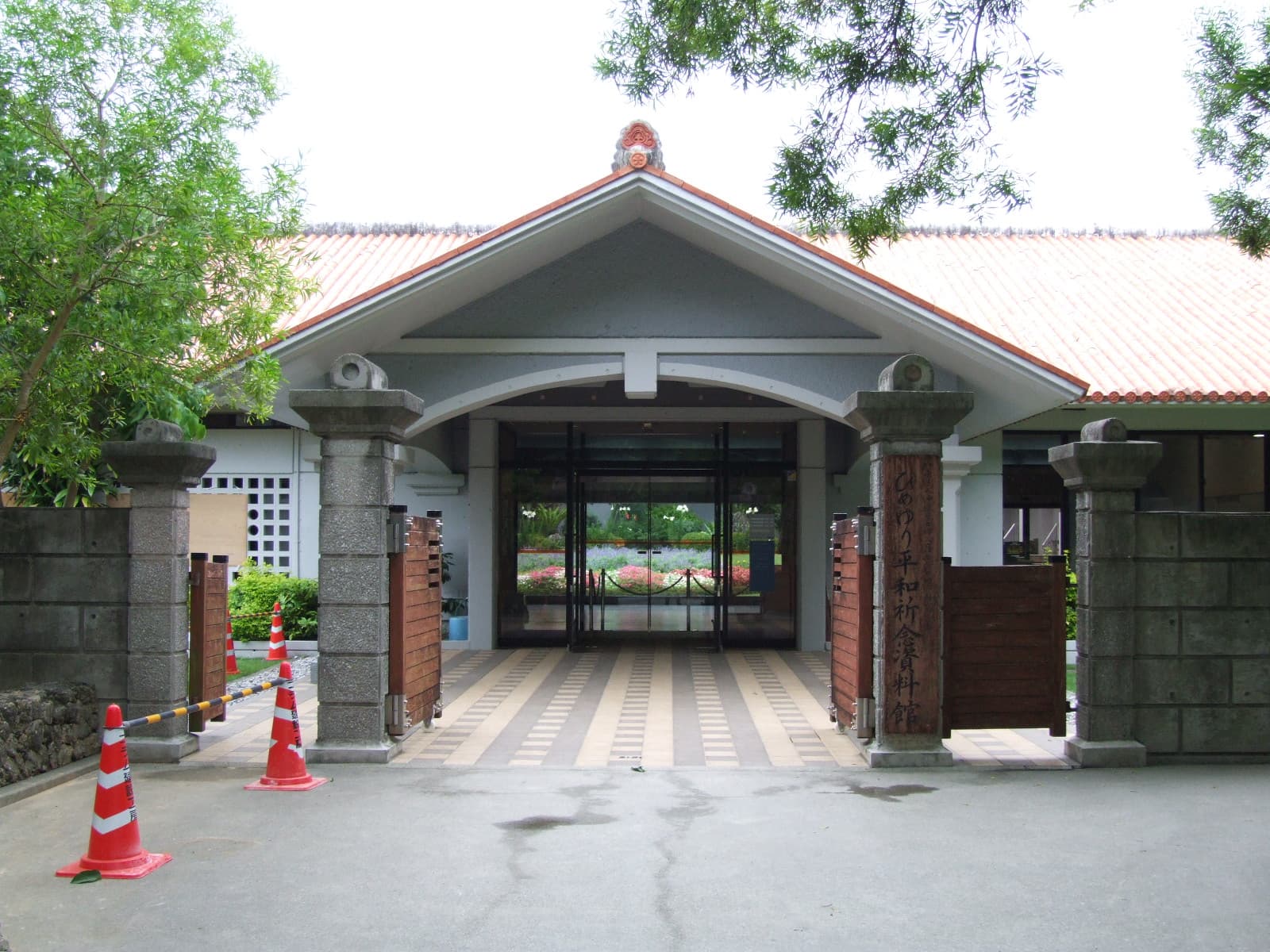
In Itoman, at the southern tip of the island, this small and unflinching museum is built around the site of a wartime surgical cave where more than 200 schoolgirls, mobilized as the Himeyuri Student Nurse Corps, tended wounded soldiers during the Battle of Okinawa. Survivor testimonies, personal effects, and the cave itself (viewable from an observation point) tell one of the war's most closely documented civilian stories. Many visitors default to the larger Peace Memorial Park a few kilometers south; the Himeyuri museum offers a more intimate, specific account of the battle's human cost.
Getting there: About a 40-minute drive or bus ride south from Naha (Okinawa Bus routes toward Itoman); on-site parking available. There is no monorail this far south, so a car or bus is essential. Admission ¥450.
03Okinawa
Seifa Utaki Sacred Grove
斎場御嶽
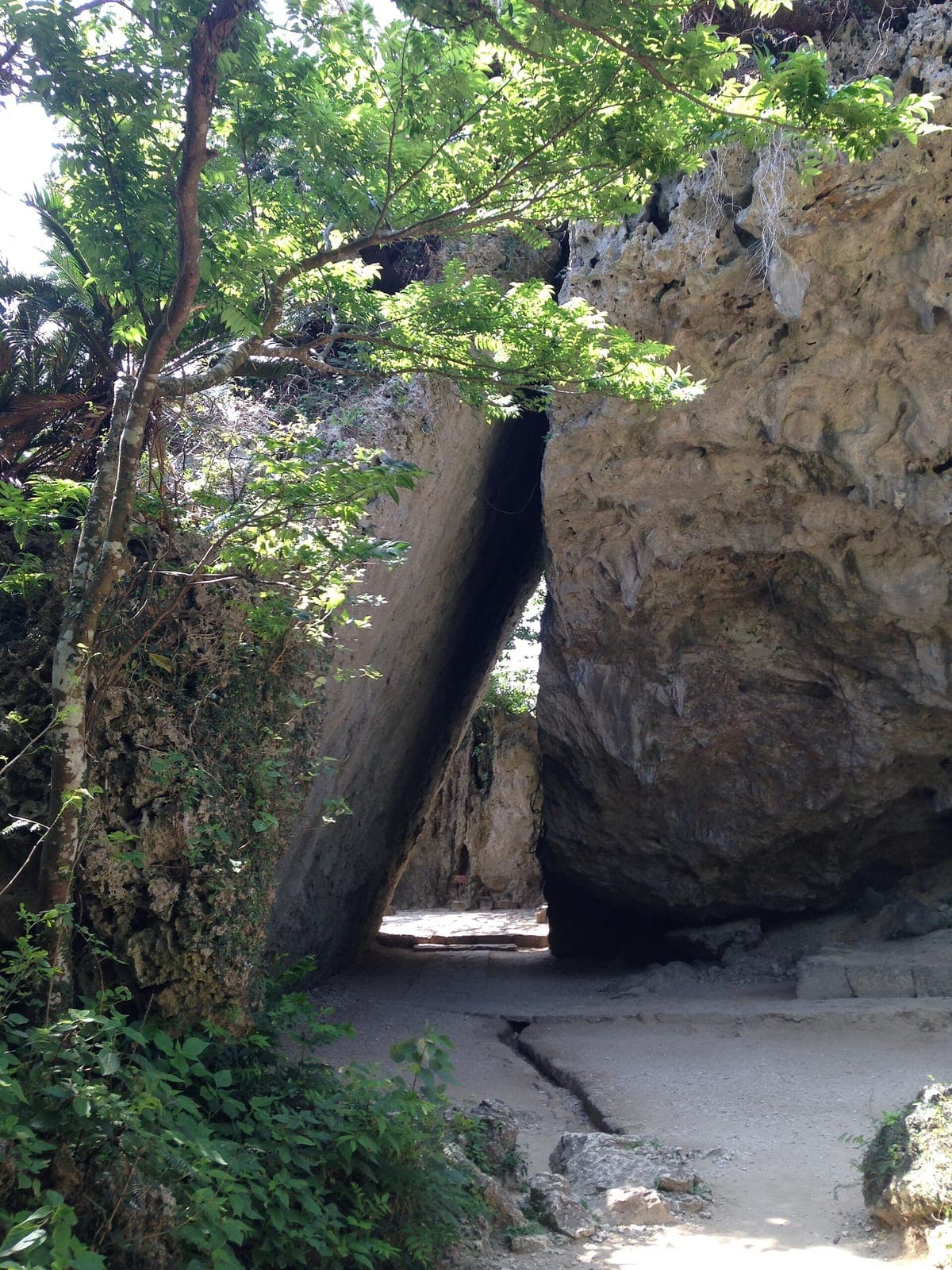
Seifa Utaki, in Nanjo on the island's southeast, is considered one of the holiest sites of the entire Ryukyu Kingdom. Its signature feature is a natural triangular rock portal — two immense leaning slabs forming a cleft — traditionally believed to connect the spiritual and physical worlds. Surrounded by dense subtropical forest, the grove keeps a hushed, reflective atmosphere that mainstream itineraries, fixed on beaches, tend to skip entirely.
Getting there: From Naha, take a bus toward Nanjo City and then a short taxi ride to the site, roughly 45 minutes by car. Admission ¥300 (scheduled to rise to ¥600 from October 2026). Best in spring or autumn for mild walking weather.
04Okinawahidden gem
Nirai Kanai Bridge
ニライカナイ橋
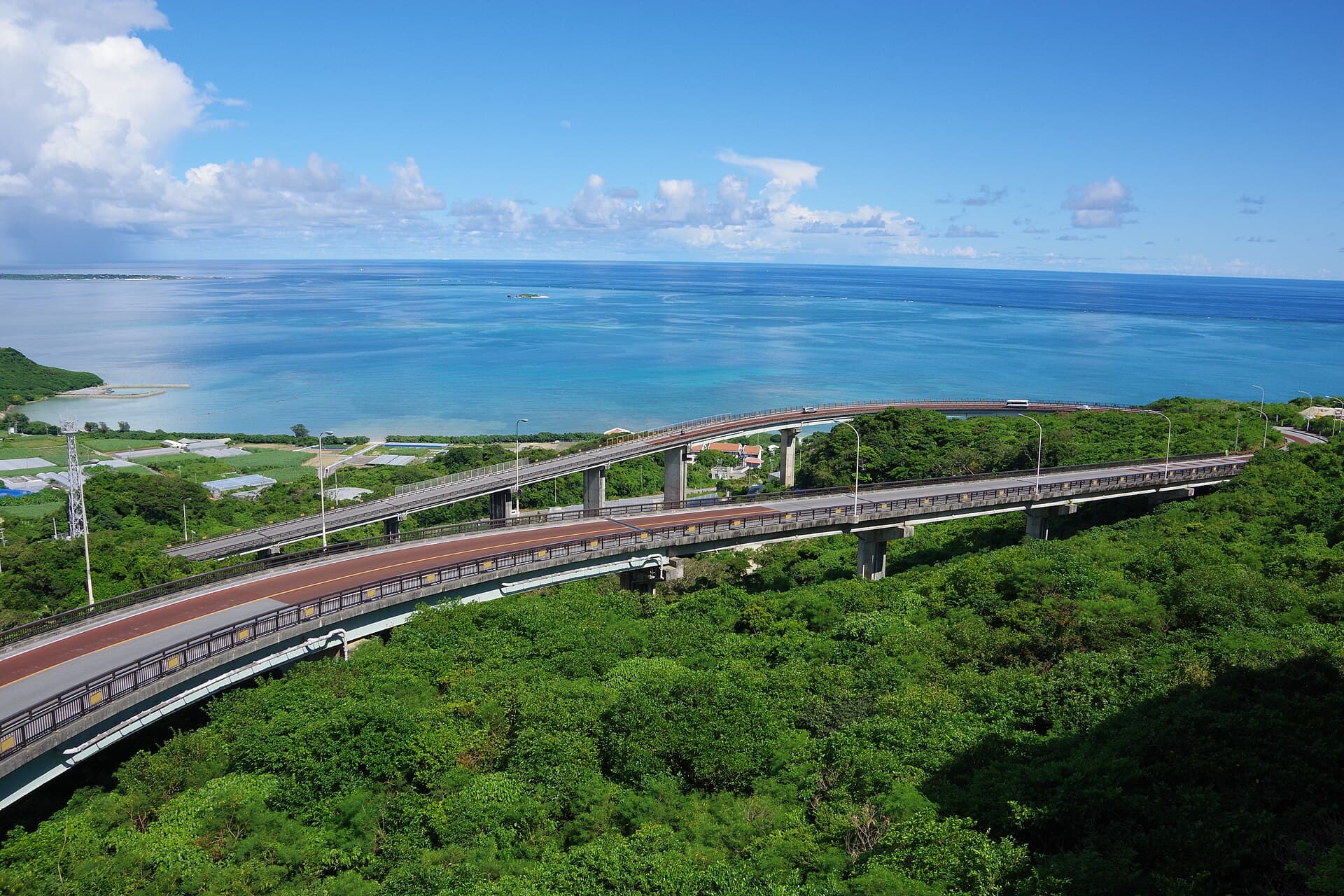
A short drive from Seifa Utaki, the Nirai Kanai Bridge is a pair of connected switchback bridges descending roughly 80 meters from the hills of Nanjo down to the Pacific. It is named for the Ryukyuan paradise said to lie beyond the sea, and a short tunnel partway across opens suddenly onto a panorama of Cape Chinen and Kudaka Island. There is no ticket booth, gift shop, or tour-bus stop — just a roadside viewpoint known mainly to road-trippers and photographers, which is exactly why it stays quiet.
Getting there: About a 35–40 minute drive southeast from Naha via Route 331 and Route 86; roadside parking areas sit on either side of the bridge. Free. Come on a clear morning for the best visibility toward Kudaka Island.
05Okinawa
Michi-no-Eki Kadena Observation Deck
道の駅かでな
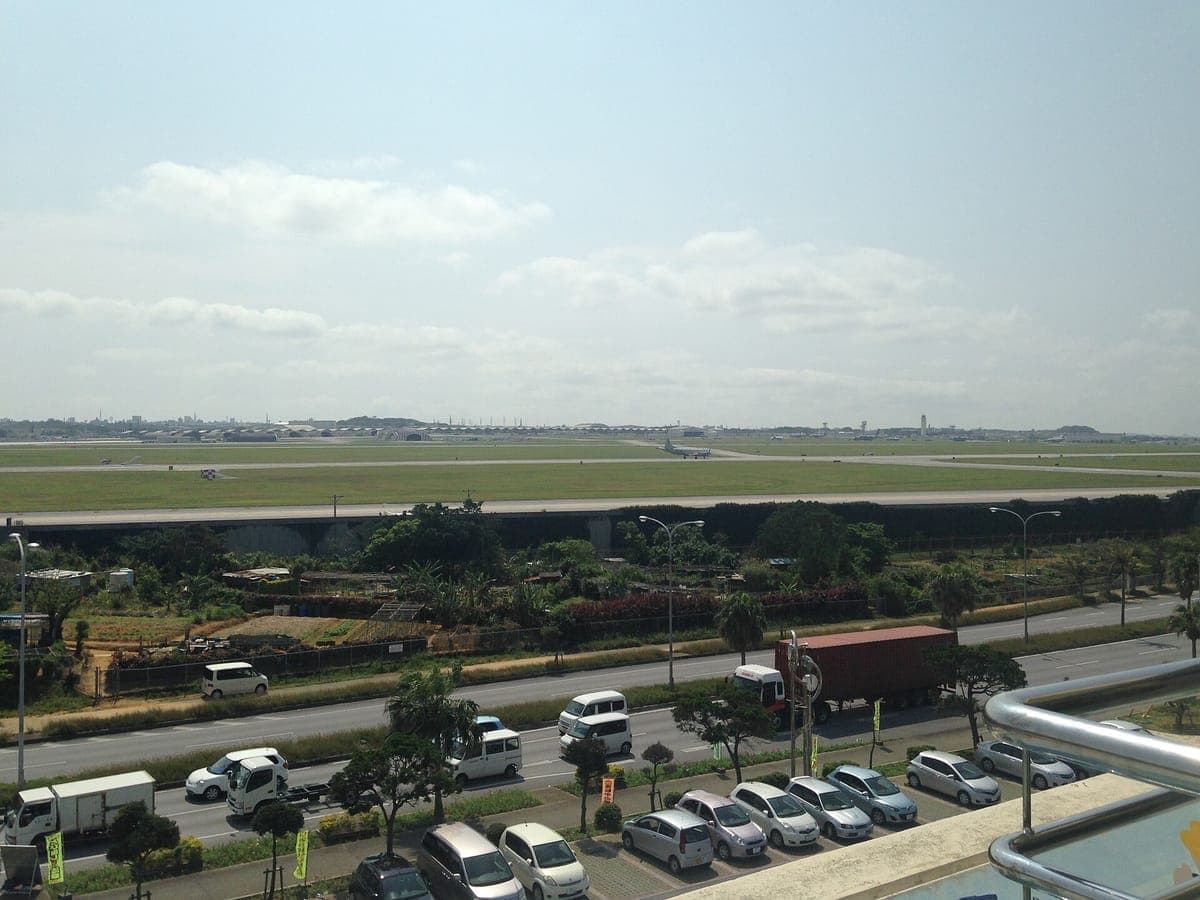
This roadside station in central Kadena has an unusual claim: its fourth-floor rooftop gallery is the only public spot in Japan offering a direct, legal view over a US military airfield's runways. Visitors watch fighter jets, tankers, and transport aircraft take off and land while reading exhibits on the base's footprint in central Okinawa, then head downstairs to a food court serving taco rice and other local specialties. It is a niche stop for aviation spotters and history-minded travelers, and because it sits inland — away from the beach-and-castle circuit — almost no first-timer's itinerary includes it.
Getting there: About a 40-minute drive from Naha via the Okinawa Expressway or Route 58, with free parking on site. There is no monorail nearby, so a car is recommended. Views are clearest in winter, when drier skies improve visibility.
06Okinawa
Katsuren Castle
勝連城
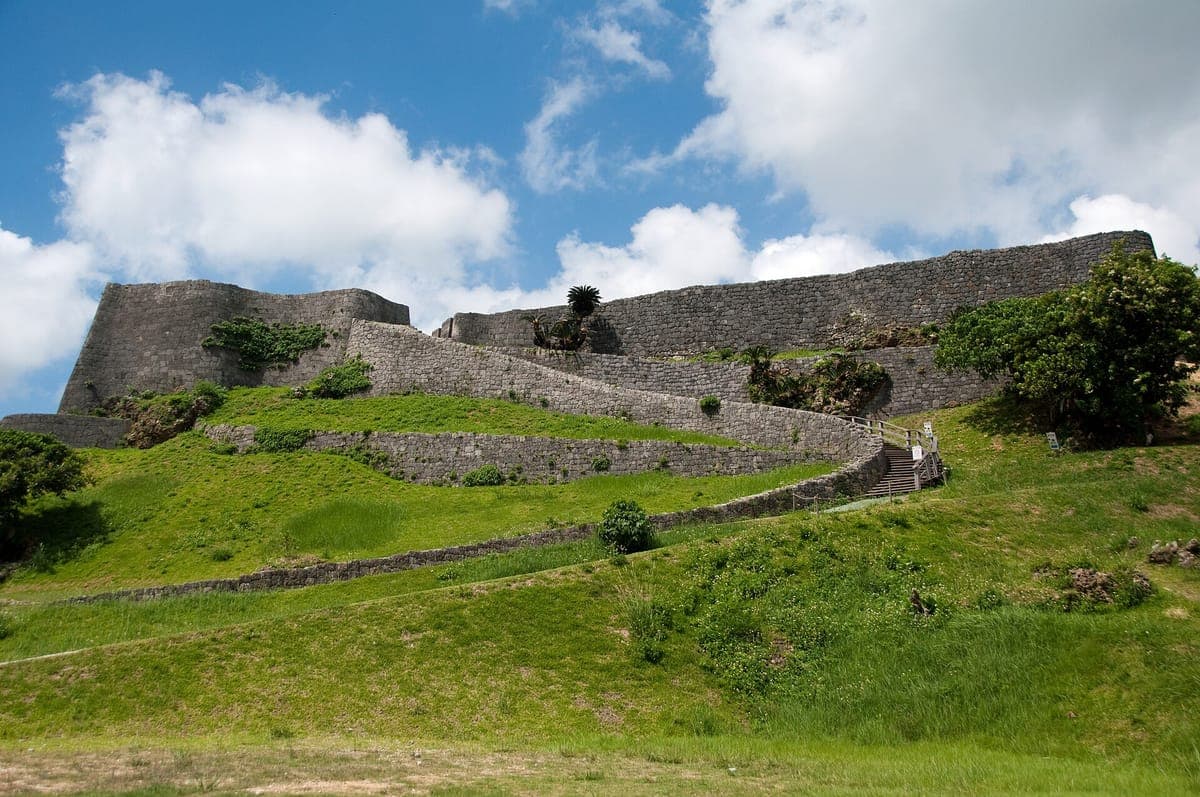
On a ridge in Uruma, east of the central belt, Katsuren is a UNESCO World Heritage castle whose tiered stone walls give up panoramic views across the sea and the surrounding landscape. It is best known among historians for a startling find: Roman and Ottoman coins unearthed here, hinting at how far the Ryukyu Kingdom's trade network once reached. Most visitors give their castle time to Shuri instead, leaving Katsuren's ramparts comparatively uncrowded.
Getting there: About a 57-minute drive from Naha Airport; by transit, take the monorail to Asahibashi Station and transfer to a bus bound for Katsuren. Admission ¥600 (Amawari Park facility fee; groups of 20+ pay ¥480). Best in spring, March to May.
07Okinawa
Bise Fukugi Tree Road
備瀬のフクギ並木
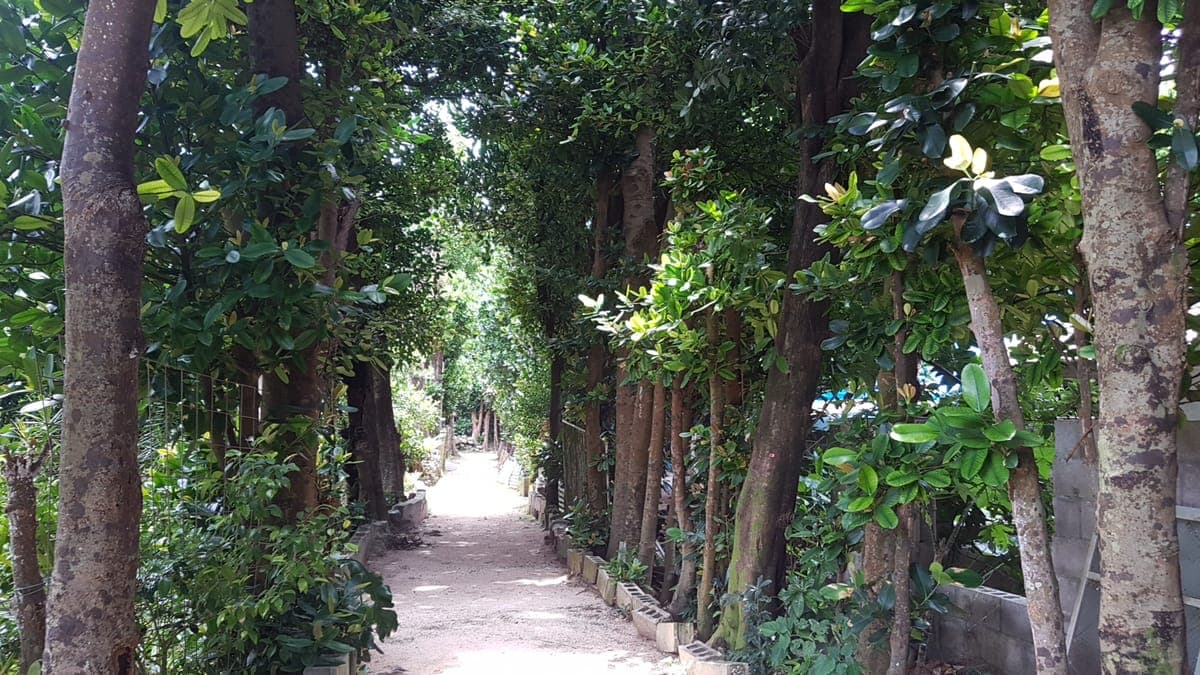
Just north of the Churaumi Aquarium in Motobu — yet almost always overlooked in its favor — Bise Fukugi Tree Road is a sandy lane lined with centuries-old fukugi (Fukugi) trees planted generations ago as windbreaks for the village. The canopy makes a green tunnel that opens onto ocean views, and the whole stretch is ideal for a slow walk, a rental bicycle, or one of the traditional ox-drawn cart rides. It is the quiet counterweight to the aquarium ten minutes away.
Getting there: Accessible by car or bus from Nago City, roughly 1 hour 40 minutes' drive from Naha Airport, with parking nearby. Free to walk, and the nearby parking is free too. Pleasant year-round.
08Okinawa
Kouri Island
古宇利島
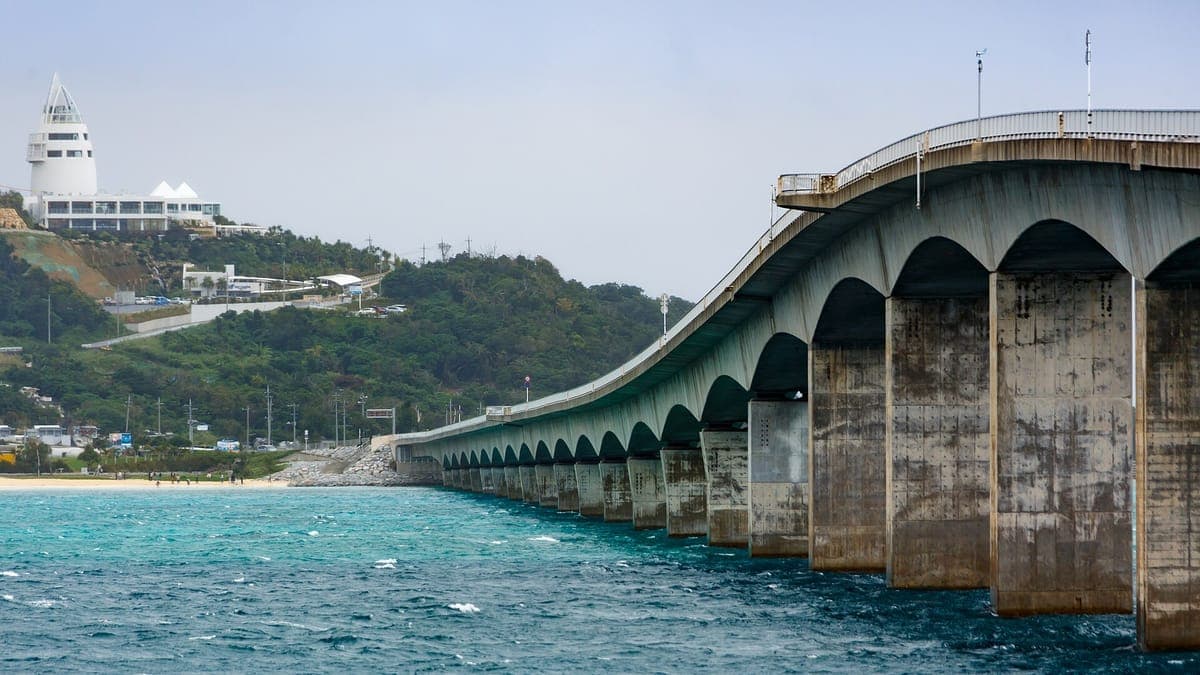
Reached by the long, photogenic Kouri Bridge from the Nakijin side of the northern peninsula, Kouri Island trades resort bustle for crystal-clear water and quiet beaches. The drive across the bridge — sea on both sides — is half the appeal, and because most travelers gravitate to the better-known islands and resorts, Kouri stays comparatively serene.
Getting there: Accessed by car via the Kouri Bridge from the main island, about 2 hours' drive from Naha Airport. The bridge is toll-free and open around the clock; some beach lots nearby charge roughly ¥300–500 for parking. Best in spring.
09Okinawahidden gem
Takatsukiyama Observatory (Zamami, Kerama)
高月山展望台
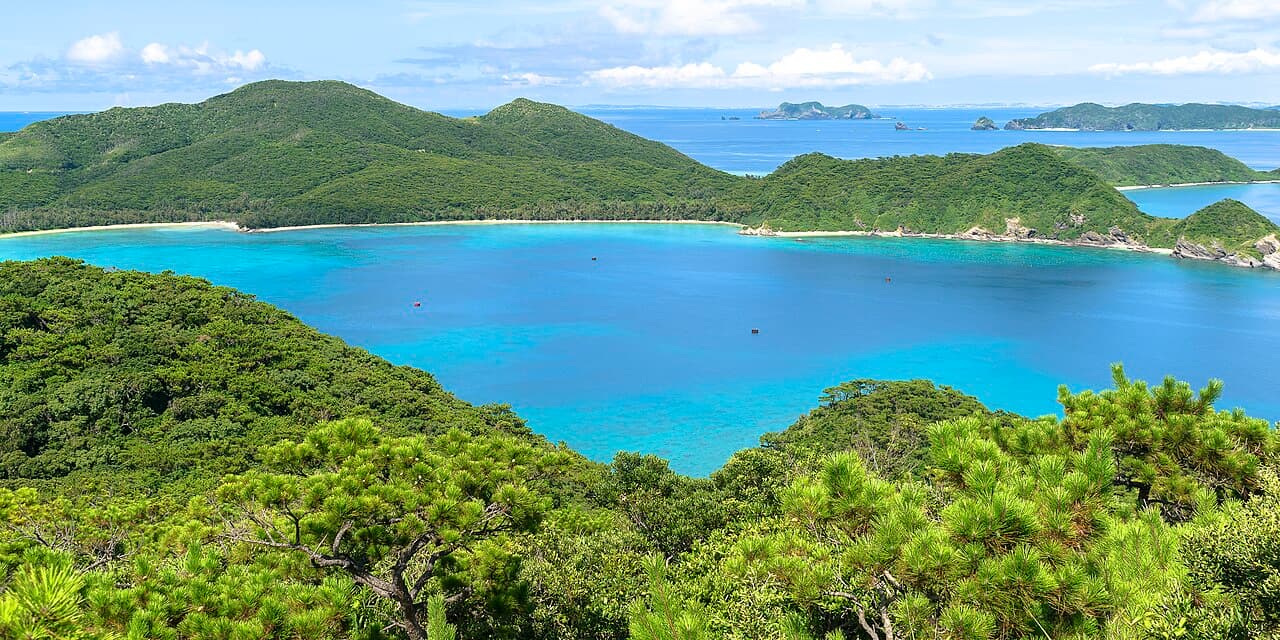
For an easy taste of the Kerama Islands, ride the ferry out to Zamami and climb to Takatsukiyama Observatory, a hilltop lookout on one of the island's highest points. A paved uphill walk from the village delivers panoramas over Agenoura Bay, the Kerama Strait, and neighboring Tokashiki Island. In winter it doubles as a whale-spotting perch — local guides use these shore lookouts to sight humpbacks and radio the boats. Because it is a free, self-guided walk rather than a paid boat tour, most visitors never realize it exists as a destination in its own right.
Getting there: Take a ferry from Naha's Tomari Port to Zamami, then walk about 25–30 minutes (1.4 km, paved trail) uphill from the Zamami Village Tourist Information Center near the port. Free. Best late December to early April for whale-spotting, peaking January to March; the views are worthwhile year-round.
When to go
Okinawa is a year-round destination, but the sweet spots are April to June and October to November, when the weather is warm without midsummer's heat, humidity, and typhoon risk. Those shoulder months also line up with the gardens: spring brings plum and wisteria to Shikinaen and mild walking weather to Seifa Utaki and Katsuren. Indoor and roadside sites — the Himeyuri museum, the Kadena deck, the Nirai Kanai Bridge — hold up in any season, with the Kadena runway views clearest in drier winter air. If a Kerama day-trip is the goal, aim for January through March, when the ferry out to Zamami coincides with humpback whale season.
Keep exploring
- Yaeyama & Miyako: Japan's Far-South Islands
- Japan's Secret Islands
- Kyushu Onsen Towns Nobody Knows
- Cherry Blossoms Off the Beaten Path — Okinawa's cherry blossoms open in January — Japan's earliest.
- Okinawa's Outer Islands for Beginners: The Easy-Access Guide — Ready for the ferries? The easiest outer islands to start with.
Ready to plan? Build your own hidden-Japan itinerary → — our trip generator turns any of these spots into a day-by-day route.